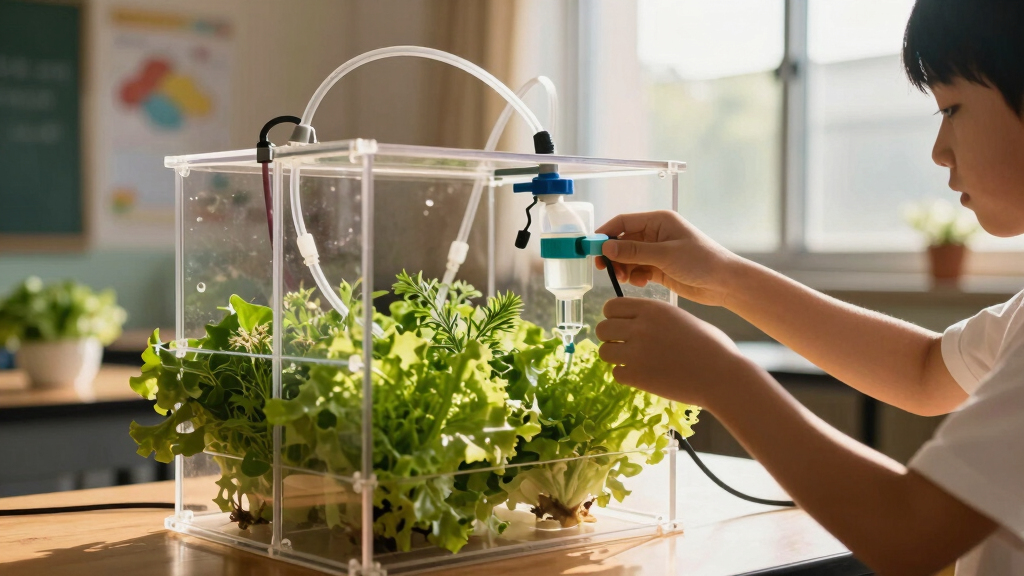

Finding the best classroom hydroponic system for food growing education involves balancing ease of use, capacity, and affordability. The Gardyn Home 4 Vertical Hydroponics System stands out as the overall best choice for its scalability and user-friendly design. For those on a tighter budget, the 52 Pods Smart Hydroponics System provides ample learning opportunities without a hefty price tag. Meanwhile, the Vevor Hydroponic Tower offers high capacity and app control for advanced classroom setups. Each option trades off features like size, automation, and cost, making it essential to match a system’s strengths to your educational goals. Keep reading for a detailed breakdown of these choices and what to consider when selecting the ideal system for your classroom needs.

Get garden gear delivered free with Prime
- Fast, free delivery on millions of items
- Prime Video, Amazon Music and more included
- Member-only deals all year
Complete the kit


Key Takeaways
- The top-ranked systems balance ease of setup with scalability, making them suitable for diverse classroom sizes.
- Automation features like timers and app controls significantly reduce maintenance and help students focus on learning.
- Capacity varies widely; smaller systems are ideal for beginner lessons, while larger towers support more students and plant varieties.
- Build quality and material durability are key for long-term classroom use, especially in high-traffic environments.
- Pricing reflects features and size; investing in slightly more expensive systems can provide greater educational value and longevity.
| 52 Pods Smart Hydroponics Growing System Indoor Herb Garden with Auto Timer |  | Best Overall for Large-Scale Classroom Food Education | Number of Pods: 52 | Grow Light Power: 24W | Water Tank Capacity: 4L | VIEW LATEST PRICE | See Our Full Breakdown |
| 15 Pods Hydroponics Growing System Indoor Garden with LED Grow Light |  | Best for Small-Scale Classroom or Beginner Education | Pods: 15 | Water Tank Capacity: 3L | Grow Light Modes: Blue for Vegetables & Herbs, Green for Flowers & Fruits | VIEW LATEST PRICE | See Our Full Breakdown |
| Gardyn Home 4 Vertical Hydroponics Growing System Kit – 30 Plants |  | Best Smart Tech and Space Efficiency for Classroom Use | Type: Vertical Hydroponic Growing System | Number of Plants: 30 | Material: Alloy Steel, Aluminum, Metal | VIEW LATEST PRICE | See Our Full Breakdown |
| Large Hydroponics Growing System, 148-Pod Vertical Hydroponic Tower Garden |  | Best for Commercial-Grade or Large Classroom Food Production | Pod Count: 148 | Number of Tiers: 5 | Lighting: 100W full-spectrum LED | VIEW LATEST PRICE | See Our Full Breakdown |
| Growell 81 Pods Hydroponics Growing System Kit with Independent Water Pump |  | Best for Versatile, Quiet Indoor Classroom Gardening | Number of Pods: 81 | Water Tank Capacity: 14L | Grow Light Power: 26W | VIEW LATEST PRICE | See Our Full Breakdown |
| Ahopegarden Hydroponics Growing System Kit: 12 Pods with LCD Control Panel |  | Best Overall for Compact Indoor Gardening | Pods: 12 | Water Tank Capacity: 5L | Lighting Duration: 22 hours | VIEW LATEST PRICE | See Our Full Breakdown |
| Ahopegarden Indoor Garden Hydroponics Growing System: 10 Pods Kit with LED |  | Best for Versatile Indoor Year-Round Gardening | Number of Pods: 10 | Height-Adjustable Light: Yes | Light Modes: Vegetables, Flowers & Fruits | VIEW LATEST PRICE | See Our Full Breakdown |
| A-Type 72 Plant Sites Hydroponics Growing System Kit with Light Blocking |  | Best for Large-Scale, Multi-Plant Classroom Projects | Number of Plant Sites: 72 | Material: Food-grade PVC | Watering System: Automated with adjustable timer | VIEW LATEST PRICE | See Our Full Breakdown |
| JESLED 6 Tiers Hydroponics Growing System Kits with 4 LED Grow Lights | 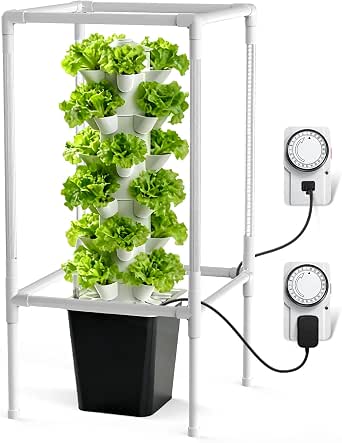 | Best for Small Spaces and Beginners | Number of Tiers: 6 | LED Grow Lights: 4 | Light Color Temperature: 5000 Kelvin | VIEW LATEST PRICE | See Our Full Breakdown |
| VEVOR Hydroponic Tower, 30 Pods, 6 Tiers Indoor Growing System with LED Light & App Control |  | Best for Tech-Savvy, Space-Conscious Classrooms | Number of Pods: 30 | Tiers: 6 | Water Tank Capacity: 20L | VIEW LATEST PRICE | See Our Full Breakdown |
| Gardyn Studio 2 Hydroponics Growing System – 16 Plants, Smart Tower |  | Best Overall for Compact Indoor Food Growing Education | Plant Capacity: 16 plants | Design: Vertical hydroponic tower | Includes: Starter seed kit, sensors, monitoring camera | VIEW LATEST PRICE | See Our Full Breakdown |
| Ahopegarden Indoor Garden Hydroponics Growing System Kit: 66 Pods, LED Grow Light, 30L Capacity |  | Best for High-Yield, Large Capacity Classroom Food Education | Pods: 66 | Water Capacity: 30L | Tank Sizes: 10L + 10L + 10L | VIEW LATEST PRICE | See Our Full Breakdown |
| classroom hydroponic system for food growing education | Water Tank Capacity |
|---|---|
| 52 Pods Smart Hydroponics Grow | 4L |
| 15 Pods Hydroponics Growing Sy | 3L |
| Gardyn Home 4 Vertical Hydropo | — |
| Large Hydroponics Growing Syst | — |
| Growell 81 Pods Hydroponics Gr | 14L |
| Ahopegarden Hydroponics Growin | 5L |
| Ahopegarden Indoor Garden Hydr | — |
| A-Type 72 Plant Sites Hydropon | — |
| JESLED 6 Tiers Hydroponics Gro | 2-3 weeks of operation |
| VEVOR Hydroponic Tower | 20L |
| Gardyn Studio 2 Hydroponics Gr | — |
| Ahopegarden Indoor Garden Hydr | — |
More Details on Our Top Picks
52 Pods Smart Hydroponics Growing System Indoor Herb Garden with Auto Timer
This system stands out for its impressive capacity of 52 pods, making it ideal for classrooms aiming to teach a wide variety of crops simultaneously. The full-spectrum 24W LED light, combined with adjustable height and smart timer features, promotes healthy, consistent growth, rivaling smaller setups like the 15 Pods Hydroponics Growing System. Its large water tank reduces maintenance, yet it requires ample space and a more complex initial setup, which could challenge beginners. Compared to the Gardyn Home 4, its higher capacity makes it better suited for scaled lessons, though it lacks AI coaching. The quiet operation allows it to fit seamlessly into educational environments without disruption. Tradeoffs include space requirements and setup complexity, but for educators seeking a comprehensive, scalable solution, this model excels.
Pros:- Large capacity with 52 pods supports diverse plant experiments
- Full-spectrum LED with adjustable modes enhances growth conditions
- Smart timer and digital controls simplify scheduling
- Quiet operation suitable for classroom settings
Cons:- Requires significant space on a countertop or windowsill
- Complex initial setup may be overwhelming for beginners
- Indoor use only limits outdoor experimentation
Best for: Large classrooms or educational programs that want to demonstrate diverse plant growth efficiently
Not ideal for: Small classrooms or those with limited countertop space, due to its size and complexity
- Number of Pods:52
- Grow Light Power:24W
- Water Tank Capacity:4L
- Light Modes:5
- Water Pump:Quiet, with sleep mode
Our verdict“This system is perfect for large classrooms seeking a scalable, feature-rich hydroponic solution for food education.”
15 Pods Hydroponics Growing System Indoor Garden with LED Grow Light
This pick makes the most sense for smaller classrooms or introductory courses, thanks to its manageable size of 15 pods and versatile grow light modes. Its dual-mode LED, supporting both vegetables/herbs and flowers/fruits, helps teach students about different plant needs, similar to the larger Large Hydroponics Growing System. The 3L water tank reduces maintenance, but its limited capacity restricts large-scale experiments. Its height adjustability and included accessories facilitate straightforward setup, although some users might find the noise from circulation noticeable. Compared to the 81 Pods Hydroponics System, it offers fewer planting options but is easier to handle in constrained spaces. Tradeoffs involve size and capacity versus functionality and complexity.
Pros:- Supports year-round growth with versatile pod compatibility
- Smart dual-mode LED promotes faster, healthier growth
- Large water tank reduces maintenance frequency
- Adjustable height for accommodating different plant sizes
Cons:- Limited to small plants and herbs due to pod size
- Setup requires electricity and indoor space
- Some noise during water circulation might be distracting
Best for: Small classrooms, beginner students, or short-term projects with limited space
Not ideal for: Advanced courses requiring large-scale or diverse plant trials, due to its limited pod count
- Pods:15
- Water Tank Capacity:3L
- Grow Light Modes:Blue for Vegetables & Herbs, Green for Flowers & Fruits
- Grow Light Duration:16 hours on / 8 hours off
- Height-Adjustable Post:13.78 inches
- Includes:Power Adapter, Grow Dome, Sponge, Sticker, Basket, Plant Food A/B
Our verdict“This system is ideal for small classrooms or beginner learners wanting an easy-to-use, versatile indoor garden.”
Gardyn Home 4 Vertical Hydroponics Growing System Kit – 30 Plants
The Gardyn Home 4 offers a compact, vertical design capable of growing up to 30 large plants, making it suitable for classrooms with limited space but high ambitions. Its AI-powered plant coaching and smart water measurement provide educational value beyond simple growing, contrasting with the more manual Growell 81 Pods System. While its space-efficient footprint supports diverse crops and simplifies maintenance, the initial cost and setup complexity can be barriers for some educators. Its automated features promote consistency and learning about smart gardening. However, it is primarily intended for indoor use, limiting outdoor flexibility. The tradeoff lies in higher expenses and reliance on technology versus straightforward systems.
Pros:- Space-efficient vertical design saves classroom space
- Includes 30 free non-GMO seed cubes for diverse crops
- AI-powered coaching simplifies plant care education
- Smart water measurement promotes consistent growth
Cons:- Higher initial purchase cost
- Requires electricity and proper setup
- Limited to indoor environments only
Best for: Classroom environments seeking smart, space-saving solutions with guided plant care
Not ideal for: Budget-conscious programs or outdoor projects, due to higher cost and indoor-only design
- Type:Vertical Hydroponic Growing System
- Number of Plants:30
- Material:Alloy Steel, Aluminum, Metal
- Color:White
- Features:Effortless Cleaning, Smart Watering, Innovative Lighting
- Indoor/Outdoor:Indoor
Our verdict“This system is best suited for classrooms wanting a smart, space-efficient hydroponic setup with guided learning features.”
Large Hydroponics Growing System, 148-Pod Vertical Hydroponic Tower Garden
The WooRoot Max excels in high-yield settings, with 148 pods across five tiers, ideal for large classrooms or educational programs that want to demonstrate commercial-scale hydroponics. Its automated NFT nutrient circulation and full-spectrum 100W LED lighting support rapid, consistent growth, surpassing smaller systems like the Gardyn Home 4 in capacity. While its robust design offers versatility and high productivity, the setup demands guidance and a significant initial investment. Its complexity and higher price point make it less suitable for small-scale or casual classroom environments. For institutions aiming to expose students to advanced, large-scale food production, this model provides a compelling, though more intensive, learning platform.
Pros:- High capacity with 148 pods supports diverse experiments
- Automated nutrient circulation reduces manual effort
- Full-spectrum LED for all growth stages
- Supports large area with compact footprint
Cons:- Complex to set up without guidance
- Higher cost limits accessibility for some schools
- Limited plant variety info provided
Best for: Educational programs or classrooms aiming to simulate commercial hydroponic farms at a smaller scale
Not ideal for: Small classrooms or casual hobbyists, due to its size, complexity, and cost
- Pod Count:148
- Number of Tiers:5
- Lighting:100W full-spectrum LED
- Tank Capacity:34L nutrient reservoir, 9.5L misting tank
- Coverage:Supports 3.8 sq ft of floor space
Our verdict“This system suits large or advanced classrooms focused on experiential learning of commercial-scale food production systems.”
Growell 81 Pods Hydroponics Growing System Kit with Independent Water Pump
The Growell 81 Pods system balances capacity and ease of use, with its independent water pump and full-spectrum lighting making it attractive for classrooms that want a sizable indoor garden without overwhelming complexity. Compared to the 15 Pods system, it offers nearly five times the planting capacity, supporting broader educational projects. Its quiet operation (<20dB) and mobility with lockable wheels enhance classroom integration, though the need for additional seed purchases and a somewhat complex setup could challenge less experienced users. As a practical, adaptable system, it fits well in educational settings that value flexibility and quiet operation, but it isn't designed for outdoor or large-scale commercial use. Tradeoffs include a higher price and setup effort versus versatility and capacity.
Pros:- Space-saving design with 81 pods for diverse crops
- Full-spectrum light with adjustable settings
- Quiet operation and mobility with lockable wheels
- Automatic water circulation enhances plant health
Cons:- Seeds are not included, requiring extra purchase
- Setup can be complex for beginners
- Indoor use only limits outdoor experimentation
Best for: Classrooms seeking a large yet manageable hydroponic system with quiet operation and mobility
Not ideal for: Budget-conscious programs or outdoor projects, since it is indoor-only and requires additional seed investments
- Number of Pods:81
- Water Tank Capacity:14L
- Grow Light Power:26W
- Light Modes:Veg, Flower & Fruit
- Operation Noise:<20dB
- Water Circulation:Automatic, every 30 minutes
Our verdict“This system offers a flexible, high-capacity indoor hydroponic solution perfect for classrooms that want a balance of size, quietness, and mobility.”
Ahopegarden Hydroponics Growing System Kit: 12 Pods with LCD Control Panel
This system stands out for its combination of user-friendly controls and adaptable height, making it ideal for classroom settings where ease of operation is key. Compared with the Vevor Hydroponic Tower, it offers a more compact footprint, perfect for limited space, but its 5L water tank limits crop size and requires more frequent refilling, which can interrupt lessons. The LCD touchscreen simplifies monitoring, and adjustable height ensures plants get proper light exposure, but it relies on electricity and needs regular maintenance for optimal performance. Its straightforward setup and versatile design make it well-suited for educational environments that prioritize simplicity and indoor use over large-scale production.
Pros:- Compact and space-saving design ideal for indoor classrooms
- Easy-to-use LCD control panel with adjustable height
- Supports year-round growing of herbs and vegetables
Cons:- Limited water tank capacity may require frequent refilling
- Requires electricity, which could limit placement flexibility
Best for: Teachers seeking an easy-to-manage, space-efficient system for small classrooms or indoor labs
Not ideal for: Schools aiming for large-scale crop production or outdoor use, due to limited water capacity and power dependence
- Pods:12
- Water Tank Capacity:5L
- Lighting Duration:22 hours
- Height:17 inches
- Pump Cycle:30 minutes
Our verdict“This pick makes the most sense for educators needing a simple, space-efficient system for indoor food growing lessons.”
Ahopegarden Indoor Garden Hydroponics Growing System: 10 Pods Kit with LED
This system excels for its adjustable LED grow light and ease of use, making it a strong choice for classrooms focusing on a variety of plants. Unlike the JESLED 6 Tiers Hydroponics System, which offers more tiers but less light flexibility, this model’s adjustable light height and dual modes support diverse plant types, from vegetables to flowers, fostering a broader educational experience. Its 16-hour light cycle and water level window help students understand plant needs, but its 10-pod limit constrains larger projects, and frequent refilling of water and nutrients adds some maintenance. It balances simplicity with plant diversity, suited for classrooms that want versatile, year-round indoor growing.
Pros:- Adjustable LED height supports various plant sizes
- Dual light modes for vegetables and flowers
- Automatic timer simplifies operation
Cons:- Limited to 10 pods, not suitable for large-scale projects
- Requires regular water and nutrient refills
Best for: Science teachers wanting a flexible, easy-to-use system to grow multiple plant types indoors
Not ideal for: Large classes or projects requiring extensive crop volume, due to limited pod capacity
- Number of Pods:10
- Height-Adjustable Light:Yes
- Light Modes:Vegetables, Flowers & Fruits
- Light Duration:16 hours on, 8 hours off
- Height:14.5 inches
Our verdict“This system is ideal for education environments emphasizing plant diversity and year-round indoor cultivation without large-scale crop needs.”
A-Type 72 Plant Sites Hydroponics Growing System Kit with Light Blocking
This setup is designed for higher yields and larger classes, with 72 sites and omnidirectional flow that promote efficient nutrient distribution. Compared with the VEVOR Hydroponic Tower, it offers more plant sites and a more robust automated watering system, making it suitable for ambitious educational projects. Its light-blocking pipes help prevent weed growth and pipe blockages, reducing maintenance. However, the initial assembly can be complex, and the 72-site limit might still restrict very large classes. Power dependence and setup effort are tradeoffs for its high capacity and automated features, making it ideal for more advanced or larger classroom environments.
Pros:- High capacity with 72 plant sites for large projects
- Efficient omnidirectional nutrient distribution
- Automated watering with adjustable timer
Cons:- Initial assembly may be time-consuming and complex
- Requires access to power for automation
Best for: Educational programs that need to teach large groups of students with a focus on extensive plant cultivation
Not ideal for: Small classrooms or beginners who prefer simpler, plug-and-play systems due to assembly complexity
- Number of Plant Sites:72
- Material:Food-grade PVC
- Watering System:Automated with adjustable timer
- Application:Indoor and outdoor gardening
- Includes:Metal brackets, pipes, hoses, pump, timer, plant baskets, grow sponges, tools
Our verdict“This system suits classrooms aiming for large-scale, automated hydroponic projects and higher yields.”
JESLED 6 Tiers Hydroponics Growing System Kits with 4 LED Grow Lights
This compact tower is perfect for classrooms with limited space or for educators introducing students to hydroponics. Its 6 tiers and four LED grow lights deliver efficient, full-spectrum illumination, speeding up plant growth in small areas. Compared with the VEVOR Tower, which has more tiers but less integrated lighting, this system’s energy-efficient LEDs and large water tank reduce maintenance and operational costs. The silent pump and automated watering cycle ease classroom management, but the setup requires some calibration, and its indoor-only design limits outdoor applications. Its smaller size and straightforward operation make it ideal for beginners or tight spaces where simplicity matters most.
Pros:- Space-saving vertical design fits small classrooms
- Full-spectrum LED lighting accelerates plant growth
- Large water tank and silent pump reduce maintenance
Cons:- Requires electrical outlet, limiting placement options
- Setup and calibration needed for optimal operation
Best for: Classrooms with limited space or beginner students learning hydroponics basics
Not ideal for: Large-scale projects or outdoor environments, due to size and indoor-only design
- Number of Tiers:6
- LED Grow Lights:4
- Light Color Temperature:5000 Kelvin
- Water Tank Capacity:2-3 weeks of operation
- Material:BPA-free
- Warranty:3 years
Our verdict“This system is perfect for educators seeking a compact, easy-to-use hydroponic setup suitable for small spaces and beginners.”
VEVOR Hydroponic Tower, 30 Pods, 6 Tiers Indoor Growing System with LED Light & App Control
This tower combines a sleek vertical design with smart technology, appealing to classrooms that want to integrate digital tools into teaching. Its 30 pods and app control make managing multiple plants straightforward, and the water circulation system reduces manual refilling. Compared with the A-Type 72 Plant System, it offers fewer plant sites but excels in automation and real-time monitoring, making it ideal for tech-forward educational environments. The setup can be complex for beginners, and regular water refills are necessary, but its compact footprint and app integration promote independent student management and data tracking, enriching the learning experience.
Pros:- Space-efficient vertical design with 30 pods
- Smart app control for remote management
- Water circulation system reduces maintenance
Cons:- Setup may be complex for inexperienced users
- Requires regular water refills and internet connection
Best for: Tech-oriented classrooms seeking integrated digital control for small to medium plant projects
Not ideal for: Large-scale outdoor projects or classrooms without reliable internet connection, due to app dependence
- Number of Pods:30
- Tiers:6
- Water Tank Capacity:20L
- Lighting:Full-spectrum LED
- Control:App control
Our verdict“This smart system suits classrooms aiming to teach digital gardening and efficient space use with modern technology.”
Gardyn Studio 2 Hydroponics Growing System – 16 Plants, Smart Tower
The Gardyn Studio 2 stands out for its sleek, vertical design that makes it ideal for classrooms with limited space. Unlike larger systems like the Ahopegarden 66 Pods, it offers a more space-efficient footprint while still supporting a diverse range of herbs, vegetables, and flowers. Its smart AI features, including real-time monitoring and high-resolution cameras, provide an engaging learning experience without the complexity of manual adjustments. However, the need for app setup and smartphone compatibility can be a barrier for tech-averse educators, and its higher initial cost might limit budgets. Compared to more basic models, the Gardyn’s tech integration enhances student interaction but requires some familiarity with digital tools. Its sealed, no-cleaning columns reduce maintenance, making it suitable for a classroom environment where ease of use is key.
Pros:- Space-efficient vertical design perfect for classrooms with limited space
- Smart AI support with real-time monitoring enhances student engagement
- Includes a complete starter kit for immediate use
- No-clean, sealed columns reduce ongoing maintenance
Cons:- Requires smartphone app setup, which may be challenging for some users
- Higher upfront cost compared to basic hydroponic planters
Best for: Educators seeking a compact, tech-enabled system that encourages interactive food growing lessons in small indoor spaces
Not ideal for: Schools with limited budgets or students unfamiliar with smartphone apps, as setup and initial cost could be barriers
- Plant Capacity:16 plants
- Design:Vertical hydroponic tower
- Includes:Starter seed kit, sensors, monitoring camera
- Lighting:Advanced LED with sunrise/sunset modes
- Maintenance:No-clean, sealed columns
- App Compatibility:Requires smartphone app
Our verdict“This system is best suited for classrooms that prioritize high-tech, space-saving solutions to make food growing both educational and engaging.”
Ahopegarden Indoor Garden Hydroponics Growing System Kit: 66 Pods, LED Grow Light, 30L Capacity
The Ahopegarden 66 Pods System excels in offering a large-scale, versatile hydroponic setup, making it ideal for classes that want to teach about diverse crop cultivation. Its 30L water capacity and 66 pods support higher yields and multiple crop types simultaneously, a step up from the smaller Gardyn Studio 2. The independent water zones and adjustable LED grow lights allow students to understand different plant needs and growth stages, fostering hands-on learning about plant biology and resource management. However, the system’s size and power requirements mean it’s not suitable for very small or resource-limited classrooms. The initial setup can be complex for younger students or beginners unfamiliar with hydroponics, and the need for electrical outlets might limit placement options. Still, its capacity and customization features make it a comprehensive tool for in-depth food growing lessons.
Pros:- Large capacity supports high-yield, diverse crop growth
- Independent water zones enable multi-crop experiments
- Adjustable LED grow lights accommodate different plant stages
- Easy assembly with clear controls for students
Cons:- Requires electrical power for pumps and lights, limiting placement options
- Setup complexity may be challenging for complete beginners
- Size may be too large for very small or space-constrained classrooms
Best for: Educators aiming to teach about high-volume food production and crop diversity in a larger classroom or lab setting
Not ideal for: Small classrooms or schools with limited electrical access, as the setup can be complex and space-consuming
- Pods:66
- Water Capacity:30L
- Tank Sizes:10L + 10L + 10L
- Grow Light Power:53W
- Dimensions:26 x 14.5 x 17.3 inches
- Adjustable Light Height:14.68 inches
Our verdict“This system is best for classrooms that want to explore large-scale, diverse hydroponic farming with a focus on yield and crop variety.”

How We Picked
These hydroponic systems were evaluated based on multiple factors relevant to educational settings. Performance and ease of use were paramount, ensuring students can learn without technical frustrations. Build quality and safety features were also critical, as classroom environments demand durable, child-safe materials. We prioritized systems with scalable capacities and automation to minimize teacher maintenance time. Cost was considered in relation to features offered, ensuring a balance between affordability and educational value. The ranking reflects a combination of these criteria, favoring systems that deliver reliable, hands-on learning experiences while fitting typical school budgets and space constraints.Factors to Consider When Choosing Best Classroom Hydroponic System For Food Growing Education
When choosing a hydroponic system for a classroom, several factors influence its suitability. Understanding these will help you select a system that offers the right balance of usability, capacity, and educational value. Considering automation can reduce teacher workload, while system size impacts how many students can participate simultaneously. Durability and safety are paramount, especially in a school setting. Price should align with your budget but also reflect the system’s features and longevity. Lastly, think about the type of plants you want to grow and whether the system supports diverse crops for a comprehensive learning experience.Automation and Ease of Use
Automation features like timers, LED controls, and app connectivity help minimize manual adjustments, making it easier for students and teachers to focus on learning rather than maintenance. Systems with intuitive interfaces reduce setup time and prevent technical frustrations, especially important for younger students. However, higher automation often comes with increased costs and complexity, so balancing features with budget constraints is key. Choosing a system with user-friendly controls can significantly enhance the educational experience by providing more time for hands-on plant care and science lessons.
Capacity and Scalability
The number of plant sites varies widely among systems; larger capacities support multiple students working simultaneously, ideal for larger classes or project-based learning. Smaller systems are perfect for introductory lessons or limited space, but they may restrict the number of students involved at once. Consider your classroom size and curriculum goals when selecting capacity—more plants mean more hands-on opportunities but also more maintenance. Think about future expansion; a scalable system can grow with your program, providing ongoing value over several academic years.
Build Quality and Durability
Classroom environments demand systems built from sturdy, safe materials that withstand frequent use. Cheaper plastics or fragile components can break easily, disrupting lessons and requiring replacements. Look for systems with corrosion-resistant parts and secure mounting options. High-quality construction not only prolongs the lifespan but also ensures safety for students handling the equipment. Investing in durable systems can be more cost-effective over time, reducing the need for repairs or replacements and providing a more consistent learning platform.
Size and Space Requirements
Space considerations are critical when implementing hydroponics in a classroom. Larger towers and multi-tier systems offer greater capacity but require more room and proper ventilation. Smaller, compact setups fit easily on desks or shelves but may limit learning scope. Measure your available space carefully and consider how the system will fit into your existing classroom layout. Remember that accessibility for students to reach plants comfortably and safety clearance are also important factors in your choice.
Cost and Value
Budget constraints are a common concern, but the cheapest options may lack durability or automation features that enhance the learning experience. Higher-priced systems typically offer more capacity, better build quality, and smarter controls, translating into longer-term value. Consider what features are essential for your curriculum—such as app control or larger plant capacity—and weigh these against your budget. Sometimes, investing a bit more upfront results in a system that lasts longer and provides richer educational opportunities.
Frequently Asked Questions
Can these hydroponic systems be used for teaching multiple types of plants?
Yes, most classroom hydroponic systems are designed to support a variety of plants, including herbs, leafy greens, and small vegetables. However, the success depends on the system’s size, lighting, and nutrient delivery capabilities. Some systems are more versatile, allowing for different plant types simultaneously, which can enhance lessons on plant biology and growth cycles. Before purchasing, check if the system supports the specific crops you plan to teach about, and ensure it provides adequate light and space for diverse plant varieties.
How much maintenance do these systems typically require?
Maintenance levels vary depending on the system’s automation and capacity. Automated systems with timers and app controls generally require less frequent manual intervention, often limited to refilling water, replacing nutrients, and cleaning filters. Manual systems may need more regular checking and adjustments. In a classroom setting, systems that minimize maintenance are preferable to keep students engaged in learning rather than upkeep. Always consider the ease of cleaning and the availability of replacement parts when selecting a system.
Are these hydroponic systems safe for use by middle or high school students?
Most classroom hydroponic systems are designed with safety in mind, using non-toxic, food-grade materials. However, safety depends on proper supervision and instructions, especially when handling electrical components or nutrient solutions. It’s advisable to choose systems with secure wiring, covered lights, and stable structures to prevent accidents. Providing students with clear safety guidelines and involving them in routine maintenance can foster responsible handling and a safer learning environment.
Which system offers the best balance of capacity and ease of use?
The Gardyn Home 4 Vertical Hydroponics System strikes a strong balance for classrooms by offering substantial capacity while remaining user-friendly. Its vertical design maximizes space, and integrated automation minimizes technical complexity. This makes it suitable for a wide range of student ages and skill levels. While it is more expensive than smaller setups, the added capacity and ease of operation justify the investment for comprehensive food-growing lessons.
What should I consider if I want a system that supports advanced STEM lessons?
For advanced STEM education, look for systems with programmable controls, app integration, and scalability features. These allow students to experiment with automation, monitor growth parameters, and even connect with sensors for data collection. Larger, modular systems like the Large Hydroponics Tower or Vevor Hydroponic Tower provide ample space for complex experiments. Prioritize systems that offer detailed monitoring options and robust build quality to support ongoing, in-depth project work.
Conclusion
Choosing the best hydroponic system depends heavily on your specific classroom needs. The Gardyn Home 4 makes the most sense for educators seeking a balance of capacity and ease of use, suitable for larger classes or advanced lessons. The 52 Pods Smart Hydroponics System offers excellent value for smaller budgets or beginner setups, while the Vevor Hydroponic Tower caters to classrooms aiming for high capacity and tech integration. For newcomers, simple, compact systems provide a gentle learning curve, whereas more advanced setups suit STEM-focused programs. Ultimately, matching the system’s features to your curriculum goals will ensure a successful and engaging food growing education experience.
Fall yard work Picks
leaf blowers
As an affiliate, we earn on qualifying purchases.