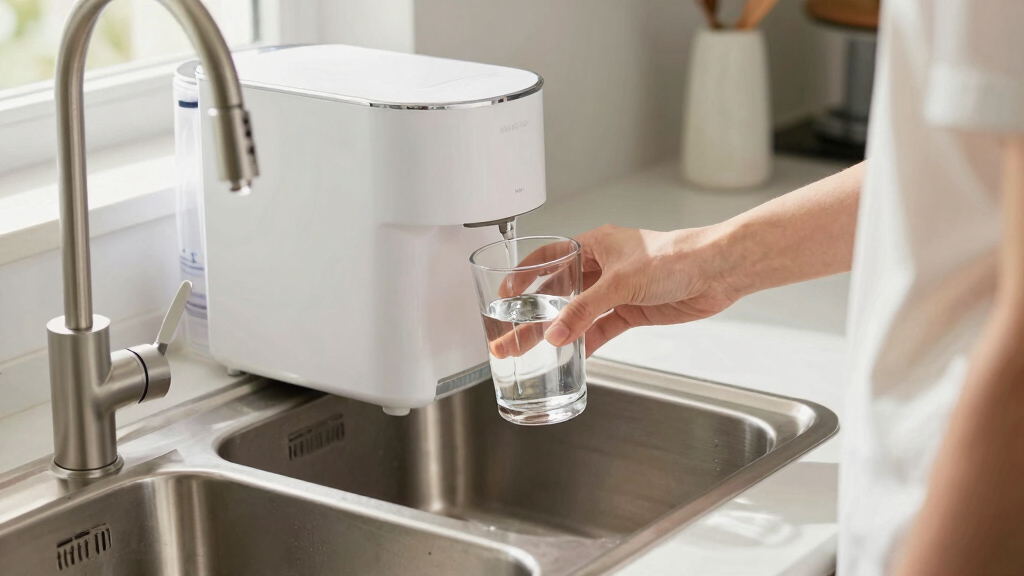
Finding the best under sink reverse osmosis system means balancing water purity, installation complexity, and long-term value. The Waterdrop G3P800 stands out as the top overall pick thanks to its high flow rate and tankless design, which minimizes space. The iSpring RO500AK offers excellent alkalinity and NSF certification, making it a strong contender for those prioritizing water quality. The main tradeoffs involve choosing between higher capacity models, ease of maintenance, and price. Continue reading for a detailed breakdown of each system and what makes them suitable for different needs.
Complete the kit


Key Takeaways
- High-capacity, tankless systems like the Waterdrop G3P800 deliver more water with less bulk, ideal for larger households.
- Alkaline and remineralization features are common among top picks, enhancing water taste and mineral content.
- Filtration stage count varies; more stages generally mean better purification but can increase complexity and cost.
- Certification like NSF or WQA Gold Seal remains a crucial indicator of water safety and system reliability.
- Price and maintenance requirements differ significantly — balancing upfront costs with long-term expenses is essential.
| Waterdrop G3P800 Reverse Osmosis Water Filter, 800 GPD, Tankless RO System |  | Best Overall for High-Capacity, Space-Saving RO | Filtration stages: 10-stage | Capacity: 800 gallons per day | Pure to drain ratio: 3:1 | VIEW LATEST PRICE | See Our Full Breakdown |
| iSpring RO500AK Alkaline Reverse Osmosis System, NSF 58 Certified, 500 GPD |  | Best for Balanced Water with Alkaline Remineralization | Certification: NSF/ANSI 58 | Flow Rate: 0.4 GPM | GPD: 500 | VIEW LATEST PRICE | See Our Full Breakdown |
| Waterdrop G2 Reverse Osmosis System, 400 GPD Tankless RO Water Filtration |  | Best for Space-Conscious Quick Water Access | Certification: NSF/ANSI 372 | Flow Rate: 400 GPD | Drain Ratio: 1:1 | VIEW LATEST PRICE | See Our Full Breakdown |
| iSpring RCC7P-AK 6-Stage Reverse Osmosis System with Alkaline Water Filter and Pump |  | Best for Deep Contaminant Removal and Mineral Enhancement | Container Type: Faucet | Installation Type: Under Sink | Purification Method: Reverse Osmosis, Alkaline, Activated Carbon | VIEW LATEST PRICE | See Our Full Breakdown |
| iSpring RCC7AK-BN NSF Certified 6-Stage Reverse Osmosis System with Alkaline Remineralization |  | Best for Easy DIY Installation with Mineral Balance | GPD: 75 | Stages: 6 | Certification: NSF/ANSI 58 | VIEW LATEST PRICE | See Our Full Breakdown |
| Waterdrop G5P500A Reverse Osmosis System, 8-Stage RO Filtration, Alkaline |  | Best Overall for Space-Saving, High-Flow RO | Filtration stages: 8 | Membrane pore size: 0.0001μm | Mineralization: Yes, Ca²⁺, Mg²⁺, Na⁺, K⁺ | VIEW LATEST PRICE | See Our Full Breakdown |
| Waterdrop G3P600 Tankless Reverse Osmosis Water Filter System, 600 GPD |  | Best for High Capacity and Smart Monitoring | Flow Rate: 600 GPD | Filtration Stages: 8-stage | Tankless: Yes | VIEW LATEST PRICE | See Our Full Breakdown |
| APEC Water RO-90 5-Stage Under Sink Reverse Osmosis System 90 GPD |  | Best for High-Quality, Reliable Water | Flow Rate: 90 GPD | Number of Stages: 5 | Maximum Feed Water Pressure: 85 psi | VIEW LATEST PRICE | See Our Full Breakdown |
| APEC Water ROES-50 5-Stage Under Sink Reverse Osmosis System, 50 GPD |  | Best for Budget-Friendly, Reliable Purification | Flow Rate: 50 GPD | Number of Stages: 5 | Maximum Water TDS Level: 2000 ppm | VIEW LATEST PRICE | See Our Full Breakdown |
| 5-Stage Reverse Osmosis System Under Sink Water Filter with WQA Gold Seal Certification |  | Best Certified for Quality and Reliability | Certification: WQA Gold Seal, NSF/ANSI 58 & 372 | Filtration Stages: 5 | Capacity: 50 gallons | VIEW LATEST PRICE | See Our Full Breakdown |
| under sink reverse osmosis system | Flow rate | Dimensions |
|---|---|---|
| Waterdrop G3P800 Reverse Osmos | 3028 liters per day | 18.12"L x 5.67"W x 17.72"H |
| iSpring RO500AK Alkaline Rever | 0.4 GPM | 16.13" L x 5.13" W x 16.25" H |
| Waterdrop G2 Reverse Osmosis S | 400 GPD | 17.3"L x 5.9"W x 14"H |
| iSpring RCC7P-AK 6-Stage Rever | — | — |
| iSpring RCC7AK-BN NSF Certifie | — | — |
| Waterdrop G5P500A Reverse Osmo | 500 GPD | 6.6" L x 3.2" W x 11.3" H |
| Waterdrop G3P600 Tankless Reve | 600 GPD | 18.12"L x 5.67"W x 17.72"H |
| APEC Water RO-90 5-Stage Under | 90 GPD | — |
| APEC Water ROES-50 5-Stage Und | 50 GPD | — |
| 5-Stage Reverse Osmosis System | — | — |
More Details on Our Top Picks
Waterdrop G3P800 Reverse Osmosis Water Filter, 800 GPD, Tankless RO System
The Waterdrop G3P800 stands out for its impressive 800 GPD flow rate, making it ideal for large families or busy households that need continuous, high-volume water. Its tankless design eliminates bulky storage tanks, saving valuable under-sink space and reducing contamination risks. The 10-stage filtration system effectively targets heavy metals, fluoride, and PFAS, ensuring safer, cleaner water. Compared to the iSpring RCC7P-AK, which offers robust contaminant removal but at a lower flow rate, the G3P800 prioritizes capacity and space efficiency. However, the installation process may demand advanced plumbing skills, and the 800 g weight listed appears inconsistent—likely a typo. The LED display adds a smart touch, providing real-time water quality data. This system suits large households seeking continuous, space-efficient filtration with smart monitoring, but is less suited for small kitchens with limited space or those wary of complex installation.
Pros:- Exceptional 800 GPD capacity for high-volume use
- Tankless design saves space and reduces bacterial buildup
- Multi-stage filtration effectively removes diverse contaminants
- Smart faucet with real-time water quality monitoring
Cons:- Installation may require advanced plumbing skills
- Weight of 800 g listed seems inconsistent with capacity—likely a typo
Best for: Large families or busy households that need high flow and space savings
Not ideal for: Small kitchens or users seeking simple, plug-and-play installation
- Filtration stages:10-stage
- Capacity:800 gallons per day
- Pure to drain ratio:3:1
- Flow rate:3028 liters per day
- Dimensions:18.12″L x 5.67″W x 17.72″H
- Material:Reverse Osmosis Membrane & Carbon Block & PP Cotton
- Installation type:Under Sink
- Power source:Corded Electric
- Maximum temperature:100 °F
Our verdict“This pick is best for large households prioritizing high capacity and space-efficient filtration with smart features.”
iSpring RO500AK Alkaline Reverse Osmosis System, NSF 58 Certified, 500 GPD
The iSpring RO500AK offers a compact, tankless design that suits households needing a reliable, space-efficient system with a focus on taste and pH balance. Its 500 GPD capacity and auto-flush feature extend membrane life, making it suitable for large households that want continuous, high-quality water. Compared with the Waterdrop G3P800, which emphasizes capacity and advanced filtration, the RO500AK balances filtration with mineral restoration, enhancing flavor and health benefits. Its quick-connect fittings facilitate DIY setup, though it requires access to electricity and may need space for the additional filtration components. Filter replacements every 6 to 24 months add ongoing maintenance considerations. This system is ideal for users who want high capacity and improved taste without bulky tanks, but less so for those with limited space or who prefer plug-and-play simplicity.
Pros:- High capacity of 500 GPD for continuous use
- Alkaline remineralization improves taste and pH balance
- Tankless, space-saving design reduces contamination risk
- Auto-flush prolongs membrane lifespan
Cons:- Requires electrical power to operate
- Filter replacements needed every 6 to 24 months
- No included tank, which may require extra space
Best for: Large households seeking balanced, mineral-rich water with space-saving design
Not ideal for: Small kitchens or users preferring systems without electrical dependency
- Certification:NSF/ANSI 58
- Flow Rate:0.4 GPM
- GPD:500
- Dimensions:16.13″ L x 5.13″ W x 16.25″ H
- Water Waste Ratio:2:1
- Remineralization:Yes
- Filter Life:Up to 24 months
- Installation:Tankless, quick-connect fittings
Our verdict“This system suits large households wanting high-capacity, space-efficient filtration with mineral enhancement.”
Waterdrop G2 Reverse Osmosis System, 400 GPD Tankless RO Water Filtration
The Waterdrop G2 combines a 400 GPD flow rate with a tankless design, ideal for homes that value quick access to filtered water without bulky tanks. Its NSF/ANSI 372 certification confirms the use of lead-free materials, and its simple twist-and-pull filter replacements streamline maintenance. Compared to the Waterdrop G3P800, it offers a lower capacity but excels in compactness and ease of use. The low drain ratio of 1:1 boosts water efficiency, making it friendly for areas with water restrictions or high utility costs. Installation requires electrical access and some drilling, which could challenge less experienced users. The system’s space-saving design makes it suitable for small kitchens, but its slightly lower flow rate might be less ideal for very large households with high water needs.
Pros:- 400 GPD flow rate allows quick water access
- Tankless, space-efficient design
- Easy filter replacement in seconds
- Low drain ratio improves water efficiency
Cons:- Requires electrical outlet and drilling for installation
- Installation may be complex for some users
Best for: Small to medium households prioritizing quick, space-efficient filtration
Not ideal for: Large households or those needing the highest flow capacity
- Certification:NSF/ANSI 372
- Flow Rate:400 GPD
- Drain Ratio:1:1
- Design:Tankless
- Dimensions:17.3″L x 5.9″W x 14″H
- Maximum Flow Rate:0.28 gpm
- Supported TDS Level:Maximum 300 ppm
- Installation:Under Sink
Our verdict“Best suited for small or space-conscious households wanting quick, reliable filtered water without bulky tanks.”
iSpring RCC7P-AK 6-Stage Reverse Osmosis System with Alkaline Water Filter and Pump
The iSpring RCC7P-AK leverages a booster pump to enhance filtration efficiency, making it effective at removing over 1,000 contaminants, including lead, fluoride, and chlorine. Its 75 GPD capacity suits typical household needs while the added alkaline stage restores minerals, improving flavor and health benefits. Compared with the Waterdrop G2, which emphasizes space and simplicity, the RCC7P-AK provides a more thorough filtration process suitable for households with higher contamination concerns. Installation requires some technical skill due to the pump and multiple filters, and its size may be a tight fit for compact under-sink spaces. The initial cost is higher, but its durability and filtration power justify the investment for safety-conscious users.
Pros:- Effective removal of over 1,000 contaminants including lead and fluoride
- Alkaline stage enhances taste and mineral content
- High-capacity filtration suitable for family use
- Booster pump ensures strong water pressure
Cons:- Installation may require technical skills
- System size may be large for tight under-sink spaces
- Higher initial cost
Best for: Households needing thorough contaminant removal and mineral restoration with reliable performance
Not ideal for: Users with limited space or those seeking a simple, DIY-friendly setup
- Container Type:Faucet
- Installation Type:Under Sink
- Purification Method:Reverse Osmosis, Alkaline, Activated Carbon
- Power Source:Corded Electric
- Maximum Temperature:100 °F
- Maximum Water TDS Level:2000 PPM
- Item Dimensions:15″L x 8″W x 18″H
- Capacity:75 gallons
Our verdict“Ideal for households prioritizing thorough filtration and mineral enhancement, despite the need for technical installation and space considerations.”
iSpring RCC7AK-BN NSF Certified 6-Stage Reverse Osmosis System with Alkaline Remineralization
The iSpring RCC7AK-BN stands out for its simple top-mounted installation, making it accessible for DIY enthusiasts. Its 6-stage filtration combines effective contaminant removal with a remineralization stage that adds natural minerals, balancing pH and improving flavor. The transparent filter housing offers easy monitoring of filter status, reducing surprises. Compared with other systems like the Waterdrop G2, which emphasizes space efficiency, this model emphasizes ease of installation and mineral enhancement. It’s certified by NSF/ANSI 58, assuring comprehensive contaminant reduction. The need for periodic filter changes and potential installation complexity could be downsides for some users. However, its straightforward design makes it a good choice for those who prefer to do it themselves without sacrificing filtration quality.
Pros:- Easy top-mounted installation from above
- Remineralizes water with natural minerals and balanced pH
- Transparent housing for easy filter monitoring
- NSF/ANSI 58 certified for trusted filtration
Cons:- Requires periodic filter replacements
- Installation may be complex for some users
Best for: Homeowners seeking a straightforward, mineral-balanced filtration system with easy DIY setup
Not ideal for: Users with very limited space or those who prefer plug-and-play models
- GPD:75
- Stages:6
- Certification:NSF/ANSI 58
- Remineralization:Yes
- Installation:Top-mounted, easy DIY
Our verdict“Best for DIYers who want a balanced, mineral-rich water system with straightforward installation and monitoring.”
Waterdrop G5P500A Reverse Osmosis System, 8-Stage RO Filtration, Alkaline
The Waterdrop G5P500A stands out for its advanced 8-stage filtration combined with a tankless design that maximizes under-sink space. Its high flow rate of 500 GPD makes it ideal for households needing immediate access to large volumes of purified water without waiting. Compared with the APEC RO-90, it offers more filtration stages and mineralization, enhancing water quality and taste. The space-saving build and modern aesthetic appeal, but installation may be complex due to the need for drilling. It’s perfect for busy families who prioritize capacity and design, but less suited for those uncomfortable with DIY plumbing.
Pros:- Eight-stage filtration effectively removes contaminants and enhances taste
- Tankless design saves space and offers a sleek appearance
- High flow rate ensures instant access to purified water
Cons:- Installation can be complicated, requiring countertop drilling
- No pricing info available, which might impact decision-making
Best for: Homeowners needing high-capacity, space-efficient filtration with mineral enrichment
Not ideal for: Renters or users hesitant to drill into countertops, or those seeking simple plug-and-play systems
- Filtration stages:8
- Membrane pore size:0.0001μm
- Mineralization:Yes, Ca²⁺, Mg²⁺, Na⁺, K⁺
- Flow rate:500 GPD
- Water ratio (Pure:Drain):2:1
- Dimensions:6.6″ L x 3.2″ W x 11.3″ H
Our verdict“This system is best for those who need a compact, high-capacity unit with mineralization and are comfortable with a more involved installation.”
Waterdrop G3P600 Tankless Reverse Osmosis Water Filter System, 600 GPD
The Waterdrop G3P600 excels with its impressive 600 GPD capacity and smart faucet that provides real-time water quality updates. Its tankless design is a step up from traditional models like the APEC RO-90, offering more space under the sink and reducing clutter. The inclusion of a digital display helps users monitor filter status and water purity effortlessly. However, it requires an electrical outlet for operation, unlike non-electric systems, which could be a drawback for some. It’s ideal for large households or small commercial setups that value capacity and smart features but may be less suitable for those with limited electrical access or minimal water needs.
Pros:- 600 GPD capacity supports high daily water needs
- Tankless design frees up under-sink space
- Smart display offers real-time water quality and filter health info
- Low drain ratio reduces water waste
Cons:- Requires electrical power, adding complexity
- Installation needs precise cabinet measurements
- Filter replacement involves some technical steps
Best for: Large families or small business owners wanting high-volume, monitored filtration
Not ideal for: Users with limited electrical outlets or those preferring simple, manual systems
- Flow Rate:600 GPD
- Filtration Stages:8-stage
- Tankless:Yes
- Dimensions:18.12″L x 5.67″W x 17.72″H
- Drain Ratio:2:1
- Certifications:NSF/ANSI 58, NSF/ANSI 372, NSF 42, FCC, EU, UK standards
Our verdict“This system suits users seeking high capacity, smart monitoring, and space efficiency, provided they can handle electrical requirements.”
APEC Water RO-90 5-Stage Under Sink Reverse Osmosis System 90 GPD
The APEC RO-90 offers a proven 5-stage filtration process that reliably produces 90 GPD of pure water, making it a solid choice for households focused on quality and durability. Compared to the APEC ROES-50, it provides a higher flow rate and larger filters for longer lifespan, though at a slightly higher cost. Its easy installation with quick connect fittings appeals to DIY enthusiasts, but regular filter replacements every 6-12 months are necessary to maintain performance. This model is well-suited for users who prioritize dependable filtration and don’t mind routine maintenance, but it might be overkill for those with minimal water consumption or tight budgets.
Pros:- Large capacity filters with longer lifespan
- Effective removal of impurities, including heavy metals
- Easy to install and maintain with quick connect fittings
- Built with durable, high-grade components
Cons:- Requires regular filter changes, increasing ongoing costs
- Higher price point compared to basic models
Best for: Home users needing a durable, high-capacity system with consistent performance
Not ideal for: Budget-conscious buyers or those seeking ultra-compact, low-maintenance units
- Flow Rate:90 GPD
- Number of Stages:5
- Maximum Feed Water Pressure:85 psi
- Includes:Lead-free faucet, high-grade tubing, quick connect fittings
- Warranty:2 years
Our verdict“Ideal for households that want dependable, high-capacity filtration and are okay with routine filter replacements.”
APEC Water ROES-50 5-Stage Under Sink Reverse Osmosis System, 50 GPD
The APEC ROES-50 provides a reliable 50 GPD of purified water with a straightforward 5-stage process proven to remove over 99.99% of impurities, including arsenic, fluoride, and microplastics. It’s a popular choice for budget-conscious households that still want effective filtration without sacrificing quality. The system’s DIY-friendly design and included installation kit make it accessible for most homeowners, but the flow rate may be slow for large families or high-demand environments. Compared with the Waterdrop G5P500A, it lacks mineralization and has fewer filtration stages, yet it excels in simplicity and affordability.
Pros:- Effective removal of impurities, including heavy metals
- Easy DIY installation with quick connect fittings
- Affordable price point
- Includes all necessary components
Cons:- Flow rate may be slow for large households
- Requires filter replacement every 6 months
Best for: Small households or renters seeking reliable, easy-to-install filtration on a budget
Not ideal for: High-demand households or users looking for mineralization or advanced features
- Flow Rate:50 GPD
- Number of Stages:5
- Maximum Water TDS Level:2000 ppm
- Filter Life Cycle:6 months
- Installation Type:Under Sink
- Material Type:Plastic
Our verdict“This system is best for those who need dependable, straightforward filtration without high capacity or extra features.”
5-Stage Reverse Osmosis System Under Sink Water Filter with WQA Gold Seal Certification
The WQA Gold Seal-certified 5-stage RO system emphasizes quality assurance with its certification and comprehensive filtration. It’s a well-rounded choice for consumers seeking proven standards, including lead reduction and contaminant removal, similar to the APEC RO-50. Its complete kit with faucet, tank, and leak detector simplifies setup, and its 12-month filter life reduces maintenance frequency. The tradeoff lies in its slightly larger footprint and the need for some plumbing skills during installation. This model is ideal for those who value certified quality and reliable performance but may be less suited for users on a tight budget or those who prefer ultra-compact setups.
Pros:- WQA Gold Seal certification guarantees quality standards
- Complete kit with faucet, tank, and leak detector
- Effective 5-stage filtration reduces a wide range of contaminants
- Longer-lasting filters with 12-month cycle
Cons:- Installation may require some plumbing skills
- Filter replacements annually add ongoing costs
Best for: Homeowners prioritizing certification, comprehensive filtration, and long-term reliability
Not ideal for: Those seeking the lowest initial cost or with minimal installation skills
- Certification:WQA Gold Seal, NSF/ANSI 58 & 372
- Filtration Stages:5
- Capacity:50 gallons
- Filter Life Cycle:12 months
- Item Dimensions:19″L x 18″W x 16″H
- Maximum TDS Level Supported:1000 ppm
Our verdict“This system is perfect for users who want certified quality, comprehensive filtration, and a complete install kit for peace of mind.”
How We Picked
To determine the best under sink reverse osmosis systems, I evaluated each model based on performance, ease of installation, build quality, maintenance needs, and overall value. I prioritized systems with proven filtration efficiency, reliable certifications, and features that improve user experience, such as tankless designs or built-in pumps. Cost-effectiveness was also a key factor, especially when balancing initial price against long-term durability and water quality. The ranking reflects a blend of these factors, aiming to recommend options suitable for different household sizes, budgets, and water quality priorities.Factors to Consider When Choosing Best Under Sink Reverse Osmosis System
When selecting the best under sink reverse osmosis system, it’s important to consider several factors that influence performance and ease of use. A well-chosen system will provide clean water consistently without adding unnecessary complexity or cost. Understanding these key aspects can help avoid common pitfalls and ensure your investment meets your needs effectively.Water Production Rate
The flow rate, measured in gallons per day (GPD), determines how much purified water you can produce at a time. Larger households benefit from systems with higher GPD ratings, reducing wait times and ensuring sufficient supply. However, higher capacity units tend to be more expensive and may require more maintenance, so it’s worth balancing your household needs with your budget.
Filtration Stages and Features
More filtration stages typically mean better removal of contaminants and improved water taste. Many top systems include stages like activated carbon filters, remineralization, and alkaline filters. Consider whether you want features like UV sterilization or remineralization, which add cost but can significantly enhance water quality. Keep in mind that more complex systems may require more frequent filter changes and maintenance.
Certification and Water Safety
Look for certifications such as NSF/ANSI 58 or WQA Gold Seal, which verify the system’s ability to remove specific contaminants and meet safety standards. Certified systems provide peace of mind that your water is genuinely purified and safe for drinking. Uncertified units might be cheaper but could lack rigorous testing, potentially compromising water quality.
Ease of Installation and Maintenance
Some systems are designed for DIY installation, while others may require professional setup. Consider models with user-friendly installation processes and accessible filter replacement. Systems with quick-change filters and clear instructions reduce ongoing maintenance hassle. Remember, regular filter changes are vital to keep the system performing at its best.
Cost and Long-Term Value
Initial purchase price is just one part of the equation. Factor in ongoing costs like replacement filters, maintenance, and energy use. Tankless models or those with fewer filters often save money over time. Investing a little more upfront can lead to better durability and water quality, especially if you rely heavily on filtered water daily.
Frequently Asked Questions
How often do I need to replace filters in an under sink reverse osmosis system?
Most systems require filter replacements every 6 to 12 months, depending on water usage and quality. Some models have clear indicator lights or filter lifespan displays, making it easier to know when to change filters. Regular maintenance ensures the system continues to produce high-quality water and prevents buildup of contaminants that could reduce efficiency or cause damage.
Can I install an under sink reverse osmosis system myself?
Many systems are designed for DIY installation and come with detailed instructions. Key steps include mounting the unit, connecting it to your water supply, and setting up the drain line. Having basic plumbing skills helps, but some systems may still benefit from professional installation, especially if your home’s plumbing setup is complex. Proper installation is critical to prevent leaks and ensure optimal performance.
Are tankless reverse osmosis systems better than traditional tank models?
Tankless systems are often more space-efficient and provide continuous water flow, making them ideal for small kitchens or busy households. However, they tend to be more expensive upfront and may require higher water pressure for optimal operation. Traditional tank models can be more affordable and easier to install, but they take up more space and may require more frequent filter changes due to stored water sitting idle.
What should I look for in a certified reverse osmosis system?
Certification from entities like NSF or WQA indicates the system has been tested for contaminant removal and safety standards. Certified systems typically remove lead, chlorine, and other common pollutants effectively, providing reassurance about water quality. Always check which specific contaminants a system is certified to remove, especially if you have particular water concerns like heavy metals or bacteria.
Is it worth paying more for premium reverse osmosis systems?
Higher-priced models often include advanced features such as higher GPD rates, better filtration stages, or enhanced minerals retention. They tend to offer longer-lasting components and easier maintenance. If you rely heavily on filtered water or have specific water quality issues, investing in a premium system can provide peace of mind and better overall performance, making it worthwhile for many households.
Conclusion
For most households, the Waterdrop G3P800 offers the best balance of capacity, space-saving design, and water quality, making it the top overall choice. Those seeking the most affordable entry point might prefer the APEC Water RO-50 for its simplicity and reliability. For households that prioritize water mineralization and filtration quality, the iSpring RO500AK stands out as a premium pick. Beginners or those with limited plumbing experience should consider models with straightforward installation features, like the Waterdrop G2. Ultimately, your choice depends on your household size, budget, and water concerns, but these options cover a broad range of needs in 2026.