

Finding the best smart electrical panel for home energy management in 2026 means balancing advanced features with ease of use and affordability. The Emporia Vue 3 stands out as the overall top pick thanks to its comprehensive energy monitoring and solar integration. For those seeking simplicity, the Refoss Smart Home Energy Monitor offers reliable real-time data with open API support. Meanwhile, the Electricity Saving Box provides a budget-friendly option to reduce energy costs without complex setup. Each product presents a different tradeoff: higher-end models deliver more detailed control, while budget options prioritize ease and basic savings. Continue reading to explore how these options compare and which suits your home best.
Key Takeaways
- Top picks differentiate primarily by integration capabilities, with some offering native APIs and others relying on third-party platforms.
- Ease of installation and user interface vary significantly, impacting suitability for beginners versus tech-savvy users.
- Advanced energy monitoring features, like solar metering and circuit-level data, are mostly found in higher-priced models.
- Budget options can still deliver meaningful savings but often lack comprehensive control or integration.
- Choosing between open APIs and cloud-based systems depends on your comfort with DIY setup versus turnkey solutions.




More Details on Our Top Picks
Emporia Vue 3 Home Energy Monitor – Smart Home Automation Module and Real Time Electricity Usage Monitor, Power Consumption Meter, Solar and Net Metering for UL Certified Safe Energy Monitoring
This option stands out for its UL certification, guaranteeing safety and reliability, which is often lacking in less regulated options like the Meross monitor. Its ability to support multiple system types—single phase, split phase, and 3-phase with an additional sensor—makes it versatile for various home setups. The Emporia Vue excels in real-time monitoring and automation, enabling detailed control over peak demand and solar integration, all accessible via an intuitive app. Compared to the Meross monitor, it offers more extensive circuit support and safety assurances, though it involves a slightly more complex installation process. The Vue’s cloud data retention and export capabilities are ideal for users who want ongoing, detailed energy analysis. However, the need for a 2.4 GHz Wi-Fi connection and optional sensor upgrades can be drawbacks for less tech-savvy or budget-conscious buyers. This pick makes the most sense for homeowners seeking a safe, reliable, and feature-rich energy management system.
Pros:- UL certification ensures safety and reliability
- Supports a wide range of electrical systems with optional sensors
- Powerful automation and solar monitoring capabilities
Cons:- Requires a 2.4 GHz Wi-Fi network for real-time data
- Installation can be complex for those unfamiliar with electrical systems
- Additional sensors sold separately may add to cost
Best for: Homeowners with complex electrical setups who prioritize safety certifications and detailed automation features.
Not ideal for: Renters or those with minimal technical skills, as installation and setup can be somewhat involved.
- Supports:Single phase, Split-phase, 3-phase systems with additional sensors
- Supports:Solar and net metering integration
- Data retention:Indefinite in the cloud
- App compatibility:iPhone, Android, Web
- Safety certification:UL and CE Listed
- Monitoring granularity:Real-time, 1 second data
Bottom line: Ideal for users needing a comprehensive, certified, and adaptable energy management system with detailed control.
Refoss Smart Home Energy Monitor Real-Time Electricity Usage Monitor with 16x60A Circuit Sensor, Energy Meter, Local Data Storage with Open API & Web UI, Home Assistant, Solar Metering, ETL Certified
Compared with the Emporia Vue, the Refoss monitor makes a compelling case for privacy-conscious users, as it operates without relying on cloud services, offering local web UI and open API support. Its ability to monitor 18 circuits with professional ±1% accuracy ensures detailed insight into every part of your home’s energy use, similar to the Meross but with a focus on local data storage. The setup process is straightforward, and the device integrates seamlessly with Home Assistant, making it excellent for smart home automation. Its support for surplus solar energy and peak demand management helps maximize solar ROI, similar to the Meross but with more emphasis on local control. The main tradeoff is that it lacks the cloud-based access of Emporia Vue, which might be limiting for users who prefer remote monitoring. It’s ideal for those who prioritize data privacy and want deep customization within their home network. This makes the most sense for tech-savvy homeowners who value security and local automation.
Pros:- No cloud dependency enhances privacy and security
- Supports detailed circuit-level monitoring up to 18 circuits
- Seamless integration with Home Assistant and MQTT
Cons:- Requires more technical setup for network and API integration
- Lacks cloud-based remote access for casual users
- Higher initial cost compared to basic monitors
Best for: Homeowners with technical skills who want full local control and privacy in their energy monitoring system.
Not ideal for: Users seeking simple plug-and-play solutions or remote access without network setup complexity.
- Supported circuits:18 circuits (up to 60A each)
- Data storage:5 years, local CSV export
- Connectivity:Open API, Web UI, MQTT
- Certification:ETL Certified
- Accuracy:±1%” for main circuits
- Supports:Surplus solar automation
Bottom line: Perfect for privacy-minded tech enthusiasts who want detailed local energy data and automation flexibility.
Electricity Saving Box Energy Power Savings Device to Reduce Electric Bill Power Energy Electricity Factor Saver Smart Intelligent Plug in Home Office Surge Protector Strips Voltage Outlet
This device is a basic energy saver designed to improve power factor and reduce waste, making it suitable for small electronics and household appliances. Its compact, plug-in design is extremely easy to use, with no setup required, unlike the more advanced monitors. While it claims to reduce electricity costs and stabilize voltage, it lacks detailed data, circuit-level monitoring, or automation features found in the Emporia Vue or Refoss monitors. Compared to the Meross system, it is far less precise, providing only an overall power factor correction without circuit-specific insights. Its safety features, like flame retardant housing and leakage protection, are solid, but it doesn’t support solar integration or real-time data tracking. It’s best for users seeking a quick, affordable solution to marginally improve power efficiency without complexity. This pick makes sense for budget-conscious users wanting a simple, plug-and-play energy saving device.
Pros:- Extremely simple plug-in operation
- Affordable and widely compatible with household electronics
- Built-in safety features
Cons:- Lacks circuit-level monitoring or detailed data
- Limited to general power factor improvements, not comprehensive management
- No integration with solar or automation systems
Best for: Homeowners or small office users looking for a low-cost, easy-to-install energy efficiency device.
Not ideal for: Those wanting detailed analysis, automation, or circuit-specific data for large or complex systems.
- Type:Power factor correction device
- Safety features:Flame retardant housing, leakage protection
- Supported loads:Home appliances, small electronics
- Design:Plug-in
- Monitoring:Overall power factor, no circuit detail
- Certifications:UL 61010
Bottom line: Suitable for users needing a quick, inexpensive way to marginally improve power efficiency without technical complexity.
Refoss Smart Home Energy Monitor, Native Open API & Web UI (No Cloud Required), Real Time Electricity Usage Monitor, Power Consumption Meter Works with Home Assistant & MQTT, Solar Net Metering, ETL
Compared to the Emporia Vue, the Refoss monitor emphasizes privacy and local control, operating without relying on cloud services. Its circuit support is extensive, with 16 branch sensors and 2 main sensors, similar to the Meross, but with a focus on local automation and deep historical data. The setup process is straightforward, and its compatibility with Home Assistant and MQTT makes it ideal for users who want custom automation. Unlike the Meross, which is more plug-and-play, Refoss provides an open API and Web UI for advanced users. Its ability to maximize solar self-consumption and support surplus energy automation is well-suited for solar homeowners. The main tradeoff is the need for some technical knowledge during installation and configuration, making it less accessible for beginners. This is best for those who prioritize privacy, automation flexibility, and solar efficiency.
Pros:- No cloud dependency, ensuring privacy and local control
- Supports extensive circuit monitoring with open API
- Seamless Home Assistant integration for automation
Cons:- Requires technical knowledge for setup and configuration
- Less suitable for non-technical or casual users
- Initial setup may be time-consuming
Best for: Solar homeowners and automation enthusiasts valuing privacy and deep circuit-level insights.
Not ideal for: Casual users seeking simple, out-of-the-box monitoring without technical setup.
- Supported circuits:16 branch + 2 main sensors (up to 60A/200A)
- Data retention:5 years
- Connectivity:Open API, Web UI, MQTT
- Accuracy:±1%” for main circuits
- Certifications:ETL
- Supports:Solar surplus automation
Bottom line: Perfect for advanced users who want full local control, deep circuit insights, and solar automation capabilities.
Meross Smart Energy Consumption Monitor with 18 Circuit Monitoring, Electricity Usage Monitor, Real-Time Power Usage Monitor, Home Assistant Support, Smart Alerts, No Subscriptions, 2-Year Warranty
Compared to the Emporia Vue and Refoss, the Meross monitor offers a user-friendly, plug-and-play design with reliable circuit-level monitoring for up to 18 circuits, making it highly suitable for users wanting detailed insights without complex setup. Its ETL certification assures safety, and the app’s ability to invert CT readings simplifies installation, especially on unbalanced 240V lines. It supports real-time power, voltage, amps, and power factor tracking, similar to the more advanced options, but with a more straightforward user interface. Unlike the Refoss, it does not operate fully without cloud dependency, but it supports Home Assistant for automation. Its main tradeoff is slightly less flexibility in system setup; it’s designed primarily for standard US wiring. This monitor is ideal for users who want a good balance between ease of use and circuit detail, without sacrificing safety. This makes the most sense for homeowners who want detailed circuit data with minimal technical hassle.
Pros:- Supports 18 circuits with easy clamp-on sensors
- ETL certified for safety
- Simple app with inversion of CT readings
Cons:- Relies on cloud for remote access and updates
- Less flexible for non-standard wiring systems
- Limited to US wiring standards
Best for: Homeowners seeking reliable circuit-level monitoring with easy installation and automation support.
Not ideal for: Power users requiring extensive customization or privacy-focused local control without cloud reliance.
- Supported circuits:18 circuits (up to 60A each)
- Real-time tracking:Power, voltage, amps, power factor
- Monitoring granularity:Real-time with historical data
- Certifications:ETL
- Connectivity:Home Assistant support, cloud optional
- Warranty:2 years
Bottom line: Ideal for users wanting a reliable, circuit-level energy monitor that balances ease of installation with detailed data.
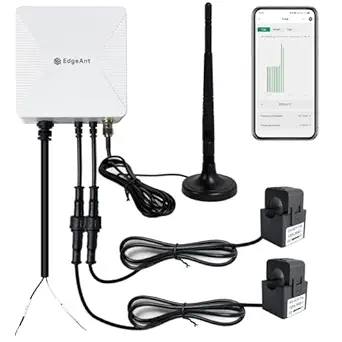
WiFi Energy Monitor with 2 * 120A Clamps, Real-Time Electricity Tracking, Smart Home Power Management,WiFi Meter Solar/Net Metering, Home Energy Automation and Control
This device stands out for its professional-grade installation compatibility and detailed data export options, making it ideal for homeowners who want comprehensive control and analysis. Compared to the Emporia Vue 3, it offers more flexible export capabilities, including exporting up to a year of historical data, which benefits those managing large or complex systems. Its clamp-on sensors support most home wiring configurations, but installation must be performed by a qualified electrician, which is a significant tradeoff for DIYers. The device’s ±2% accuracy and bidirectional measurement help optimize energy use effectively. The app’s firmware update feature and local data export make it suitable for advanced users integrating with systems like Home Assistant. However, the setup can be complex, and initial questions about US-centric documentation might require support. This pick is best for homeowners who need detailed long-term data and are comfortable with professional installation.
Pros:- Supports exporting up to one year of historical data for detailed long-term analysis
- Compatible with single-phase, split-phase, and multi-wire systems
- Bidirectional measurement for accurate power flow monitoring
- Firmware updates via app enhance functionality
Cons:- Installation requires qualified professionals, increasing upfront costs
- Setup and initial configuration can be complex for non-experts
Best for: Homeowners with large or complex electrical systems seeking detailed energy data and custom automation integration.
Not ideal for: DIY enthusiasts or small-system users who prefer plug-and-play solutions without professional setup.
- Current Clamp Sensors:Two 120A sensors
- Measurement Accuracy:±2%
- Data Export Options:Hourly, daily, monthly, and yearly data
- Supported Systems:Single-phase, split-phase, 2- and 3-wire systems
- Connectivity:WiFi 2.4 GHz
- Installation:Professional installation recommended
Bottom line: This device makes the most sense for users who need extensive data export and are comfortable with professional installation and complex setup.
B0C7B1LKDW
This model is better suited for users who prioritize ease of use and straightforward setup, with a good balance of features and user ratings. Unlike the Refoss Open API, which offers advanced open integration, this device provides a simple app-based interface for monitoring and basic automation. Its 4.6-star rating and the inclusion of detailed components like current transformers make it a dependable choice for DIYers and homeowners seeking simple, reliable energy tracking. The warranty and customer support are strong points, but the interface may lack some advanced features found in more professional setups. The setup is quick, and the app’s intuitive design helps users start monitoring within minutes. The main tradeoff is less long-term data export capability and fewer customization options. This pick makes the most sense for homeowners who want reliable, easy-to-understand energy monitoring without complex integration needs.
Pros:- High customer rating (4.6 stars) indicates strong user satisfaction
- Easy setup with app-based control and monitoring
- Detailed component quality and included sensors
- Good warranty and customer support
Cons:- Limited data export options compared to more professional systems
- Less flexibility for complex automation or long-term data analysis
Best for: Homeowners or renters looking for simple, reliable energy monitoring with a good user experience.
Not ideal for: Advanced users needing extensive data export or integration with custom automation platforms like Home Assistant.
- Customer Rating:4.6/5 stars
- Included Components:Energy monitor, current transformers
- Supported Systems:Standard residential wiring
- Certification:Not specified
- Warranty:Standard manufacturer warranty
- Connectivity:App control
Bottom line: Ideal for users who want a straightforward, reliable home energy monitor without the need for advanced customization.
55 Sqft Warming Systems 120 V Electric Tile Radiant Floor HeatingCable with GFCI Protected Programmable Thermostat
This product is a practical choice for homeowners seeking affordable radiant floor heating, especially in small spaces like bathrooms. Compared to advanced energy monitors like Emporia Vue 3 or SEM-Meter, this option is less about energy management and more about heating comfort with straightforward thermostatic control. Its 55 sqft coverage and UL certification ensure safety and simplicity, but it lacks real-time energy consumption data or automation features, which limits its use for energy management. The installation is simple, with included guides, but the heating power (660W) is suited for small areas only. The product’s main benefit is cost, making it perfect for budget-conscious users, though it doesn’t offer detailed monitoring or integration for energy savings. This is best for homeowners who want a basic, inexpensive heating solution for small areas without smart features.
Pros:- Inexpensive and straightforward installation
- UL listed for safety
- Includes programmable thermostat and installation monitor
- High-quality materials with 25-year warranty
Cons:- Limited to 55 sqft coverage, not suitable for large areas
- No real-time energy monitoring or smart automation
Best for: Homeowners needing an affordable, easy-to-install heating solution for small spaces like bathrooms.
Not ideal for: Those seeking comprehensive energy management or integration with smart home systems.
- Coverage Area:55 sqft
- Power Consumption:660W
- Voltage:120V
- Certification:UL listed
- Warranty:25 years
- Includes:Digital programmable thermostat
Bottom line: This heating cable is ideal for budget-conscious users wanting simple, reliable floor heating in small spaces without smart features.
This model makes the most sense for landlords or residents of shared apartments needing to allocate energy costs accurately across multiple circuits. Compared to the Emporia Vue 3, it offers specialized features like automatic electricity cost calculation based on time-of-use tariffs, making it highly suitable for rental management. The device’s 16 circuit sensors and local data storage support comprehensive load monitoring without necessarily relying on cloud services, which is a strong advantage for privacy-conscious users. Its compatibility with Home Assistant and MQTT provides flexible automation options. However, its primary focus on rental and shared spaces limits its appeal for typical residential homeowners wanting detailed long-term data. The setup is straightforward, and the app provides detailed history and cost tracking, but the unit’s bulk and the need for sensor placement could be a minor inconvenience. This pick is best for landlords or shared living arrangements needing detailed circuit-level cost tracking and automation.
Pros:- Supports up to 16 circuits with 50A sensors
- Calculates electricity costs based on tariffs for fair billing
- Local data storage enhances privacy and reduces dependency on cloud
- Compatible with Home Assistant and MQTT for automation
Cons:- Designed primarily for rental or shared spaces, less ideal for single-family homes
- Sensor placement may be cumbersome in some panels due to size
Best for: Landlords, property managers, or shared housing residents needing fair energy billing and circuit-level insights.
Not ideal for: Individual homeowners seeking simple or long-term energy consumption insights without detailed circuit monitoring.
- Number of Sensors:16 50A sensors
- Power Monitoring Range:Up to 415Y/240VAC
- Connectivity:WiFi, MQTT, local storage
- Supported Systems:Single-phase, split-phase, three-phase
- Special Features:Cost calculation, time-of-use tariffs
- Warranty:1 year
Bottom line: This system is perfect for rental properties or shared housing where detailed circuit and cost management are priorities.
Emporia Vue 3 Home Energy Monitor – Smart Home Automation Module and Real Time Electricity Usage Monitor, Power Consumption Meter, Solar and Net Metering for UL Certified Safe Energy Monitoring
This pick is better suited for homeowners who want a reliable, UL-certified device with extensive automation and long-term data management. Unlike the WiFi Energy Monitor, which excels in export capabilities, the Emporia Vue 3 offers a more integrated app experience with cloud access, supporting a broader range of home automation platforms. Its 16 circuit sensors and UL certification make it a safe choice for general residential use. The device supports solar and net metering, providing added value for energy-conscious homeowners with renewable systems. While setup is straightforward, its reliance on cloud services may be a drawback for users seeking total local control. The Vue 3’s robust automation features and compatibility with platforms like Home Assistant make it ideal for those seeking both safety and advanced automation. Its main tradeoff is higher cost compared to simpler monitors. This is best for homeowners wanting a balanced mix of safety, automation, and comprehensive data access.
Pros:- UL certification ensures safety and reliability
- Supports solar and net metering integration
- 16 circuit sensors for whole-home monitoring
- Compatible with various smart home platforms
Cons:- Higher price point than basic models
- Relies on cloud services which may concern privacy-focused users
Best for: Homeowners interested in automation, solar integration, and long-term energy data with safety certification.
Not ideal for: Budget-conscious users or those preferring local-only systems without cloud dependence.
- Customer Rating:4.6/5 stars
- Supported Systems:Single-phase, split-phase, 3-phase
- Number of Circuits:16
- Safety Certification:UL listed
- Monitoring Range:Up to 415Y/240VAC
- Connectivity:WiFi, App, Cloud
Bottom line: This monitor is perfect for those seeking a safe, automated, and comprehensive home energy management system with long-term data access.