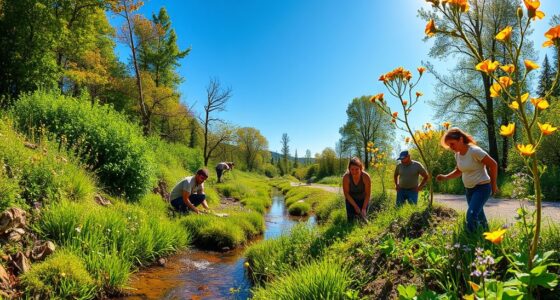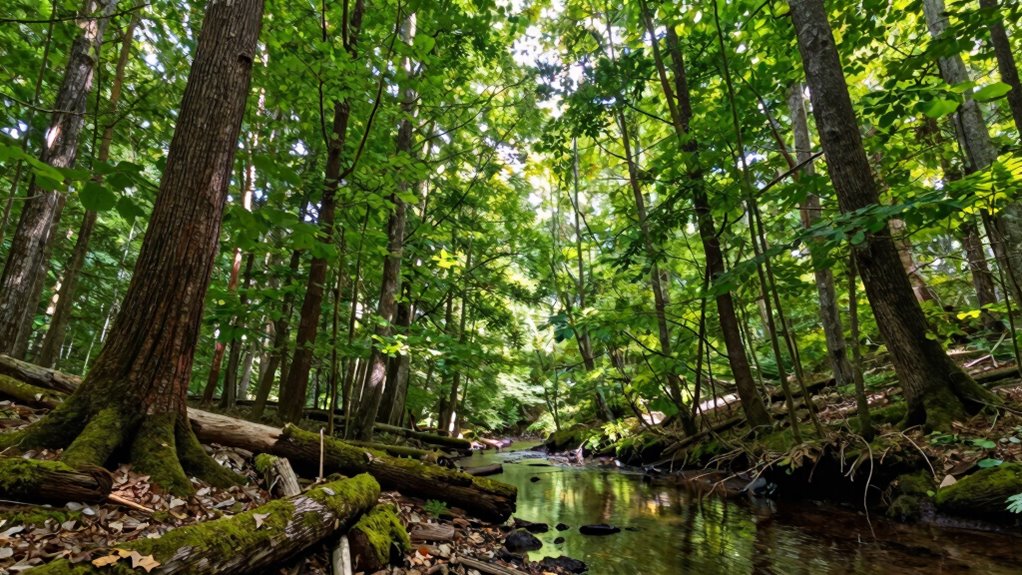

In forest ecosystems, you see carbon moving as trees absorb CO₂ during photosynthesis, storing it in trunks, leaves, and roots. Soil microbes decompose organic matter like fallen leaves, releasing CO₂ back into the air. Trees also respire, releasing some stored carbon. The balance between carbon absorption and release determines if a forest is a net sink or source. Understanding these processes helps you grasp forests’ essential role in climate regulation—keep exploring to learn more.

Get garden gear delivered free — and shop member deals
- Fast, free delivery on millions of items
- Access to Prime Big Deal Days deals on October 6–7
- Prime Video, Amazon Music and more included
Key Takeaways
- Trees absorb CO₂ during photosynthesis, storing it as carbon in their biomass.
- Forest respiration releases some stored carbon back into the atmosphere as CO₂.
- Soil microbes decompose organic matter, releasing carbon stored in fallen leaves and dead roots.
- The balance between carbon sequestration and respiration determines if the forest is a net carbon sink or source.
- Environmental factors like water, nutrients, and stress influence how carbon moves through the forest ecosystem.
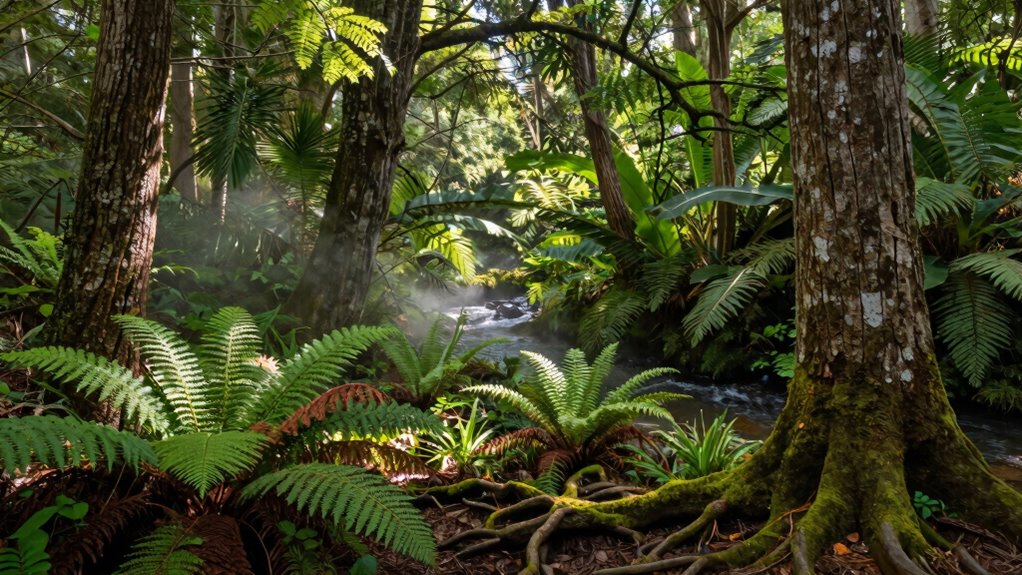
Have you ever wondered how carbon travels through forest ecosystems? It’s a fascinating process that involves numerous steps, with trees and soil acting as key players in moving carbon from the atmosphere into the land and eventually back again. When trees absorb carbon dioxide during photosynthesis, they become carbon sinks, storing carbon in their trunks, branches, leaves, and roots. This process, known as carbon sequestration, helps reduce the amount of greenhouse gases in the atmosphere, mitigating climate change. But the journey of carbon doesn’t stop there. Trees continually exchange gases with the environment through a process called forest respiration, which releases some of the stored carbon back into the atmosphere as carbon dioxide.
Forest respiration occurs in two main ways: autotrophic respiration, which comes from the trees themselves, and heterotrophic respiration, originating from soil microbes decomposing organic matter. As trees grow, they respire, releasing carbon dioxide into the air, balancing the carbon they absorb during photosynthesis. Soil microbes, on the other hand, break down fallen leaves, dead roots, and other organic materials, releasing carbon back into the atmosphere in the process. This cycle is dynamic, with carbon constantly moving between the atmosphere, vegetation, and soil. The balance between carbon sequestration by trees and release through respiration determines whether a forest is a net carbon sink or source. Understanding these processes is crucial for assessing the role of forests in climate regulation.
Recognizing how carbon moves through these ecosystems reveals how forests can both store and emit carbon. When conditions favor growth—such as adequate water, nutrients, and sunlight—trees take in more carbon than they release, strengthening their role as carbon sinks. Conversely, during droughts, pest outbreaks, or other stresses, respiration can increase as trees and microbes break down stored organic material, releasing more carbon than is absorbed. This delicate balance influences the forest’s overall impact on atmospheric carbon levels. Recognizing the importance of biodiversity in maintaining healthy forest ecosystems can help promote more effective conservation strategies that support carbon storage.
forest carbon cycle educational kit
As an affiliate, we earn on qualifying purchases.
As an affiliate, we earn on qualifying purchases.
Frequently Asked Questions
How Do Forest Fires Affect Carbon Movement?
Forest fires release stored carbon into the atmosphere quickly, disrupting the natural carbon cycle. You’ll notice a fire feedback loop where increased fires lead to more carbon release, which can intensify climate change. After a fire, the forest begins a carbon rebound, gradually absorbing CO₂ again as new growth occurs. However, frequent fires may slow this process, making it harder for ecosystems to recover and stabilize their carbon balance.
What Role Do Soil Microbes Play in Carbon Cycling?
Soil microbes act like tiny workers, tirelessly driving the carbon cycle. They perform soil respiration and microbial decomposition, breaking down organic matter and releasing carbon dioxide into the atmosphere. This process is essential because it controls how much carbon stays stored in the soil versus how much returns to the air. Without these microbes, the balance of forest ecosystems would crumble, much like a house of cards.
How Does Climate Change Impact Forest Carbon Storage?
Climate change reduces your forest’s ability to store carbon by causing more frequent droughts and higher temperatures, which hinder forest regeneration. As trees struggle to grow, the risk of reaching carbon saturation decreases, meaning less carbon gets absorbed from the atmosphere. This imbalance leads to increased carbon release, further accelerating climate change. You can help by supporting conservation efforts that promote healthy, resilient forests capable of maintaining their vital role in carbon storage.
Can Urban Forests Sequester Significant Carbon?
Think of urban forests as nature’s lungs in the city—yes, they can sequester significant carbon. Your urban green spaces act as essential carbon offset, absorbing CO₂ and reducing the city’s overall carbon footprint. While not as vast as rural forests, their strategic preservation and expansion boost local air quality and climate resilience. You play a part in this green defense, turning concrete jungles into powerful carbon sinks.
How Long Does Carbon Stay Stored in Forest Biomass?
Carbon stays stored in forest biomass for decades to centuries, depending on factors like forest growth rates and environmental conditions. As trees grow, they absorb and store carbon, but over time, carbon decay can release it back into the atmosphere due to natural processes or disturbances. You can think of it as a balance between forest growth, which adds carbon, and decay, which releases it, influencing long-term storage.
Conclusion
Imagine yourself as a guardian of a mighty river, where carbon flows like water through the forest’s veins. As you observe, you see it breathe in through trees and exhale back into the atmosphere, a continuous dance of life and renewal. Just as a river shapes the land, your understanding of these movements shapes your respect for nature’s delicate balance. Protect this flow, and the forest’s story will continue to unfold in harmony.
Fall yard work Picks
leaf blowers
As an affiliate, we earn on qualifying purchases.