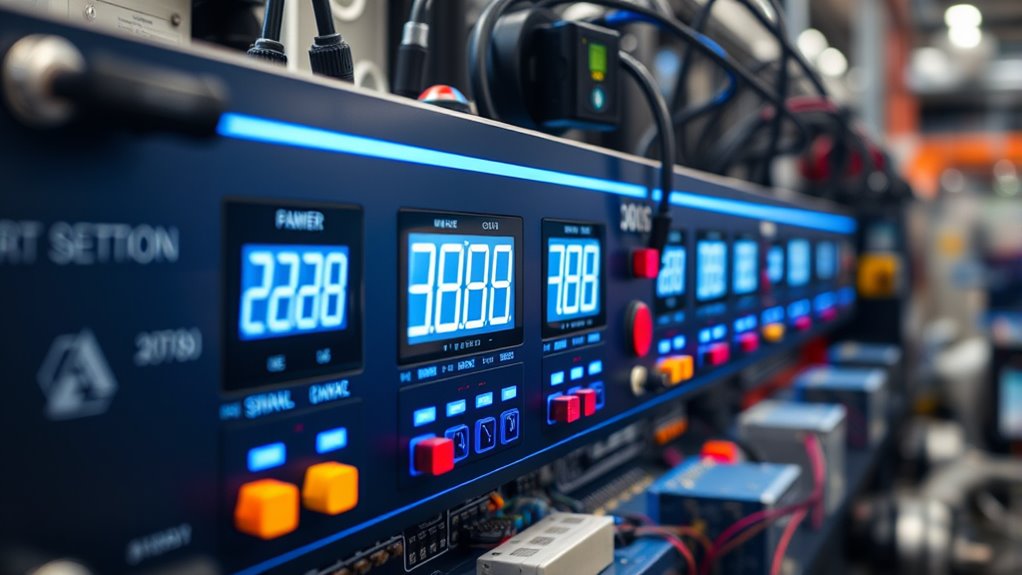

In automation, controllers like PID manage processes by using sensor feedback to keep variables within set points. Tuning PID involves adjusting proportional, integral, and derivative parameters to optimize system response, reduce errors, and enhance stability. Proper calibration of sensors guarantees accurate measurements, which is critical for effective control. When calibration and tuning are done right, your system runs smoothly, saving time and resources. Keep exploring to discover how these techniques can improve your automation projects further.

Get garden gear delivered free with Prime
- Fast, free delivery on millions of items
- Prime Video, Amazon Music and more included
- Member-only deals all year
Key Takeaways
- Controllers, especially PID controllers, regulate processes by adjusting outputs based on real-time sensor feedback.
- Proper sensor calibration ensures accurate data, which is vital for effective controller performance.
- PID tuning involves setting proportional, integral, and derivative parameters to minimize error and optimize response.
- Understanding process dynamics aids in selecting and tuning controllers for system stability and responsiveness.
- Integrating calibration with control strategies enhances system reliability, efficiency, and overall automation performance.

Have you ever wondered how businesses streamline repetitive tasks and boost efficiency? The answer often lies in automation, especially through well-designed control systems. At the core of these systems are controllers that manage processes by continuously adjusting outputs based on feedback. To guarantee these controllers work effectively, understanding sensor calibration is essential. Proper sensor calibration guarantees that the data your sensors provide is accurate, which is paramount because inaccurate readings can lead to incorrect control actions. When sensors are properly calibrated, your control loop design becomes more reliable, allowing for smoother operation and fewer disturbances. This calibration process involves comparing sensor outputs with known standards and making necessary adjustments so that readings reflect real-world values precisely. Without accurate sensor calibration, even the most sophisticated control algorithms can fail to maintain desired process conditions. Additionally, regular maintenance and monitoring further ensure ongoing accuracy and optimal system performance.
Control loop design is another essential aspect of automation. It involves creating a system where input signals from sensors are processed and used to generate appropriate output commands to actuators. Think of it as a continuous cycle that keeps a process stable and within specified parameters. When designing a control loop, you need to determine the right type of controller—like a PID controller—that can interpret sensor signals and respond accordingly. The goal is to minimize error and maintain process variables, such as temperature or pressure, at set points. Achieving this requires tuning the controller’s parameters so that the system reacts quickly without overshooting or oscillating. Proper control loop design also considers the dynamics of the process, ensuring stability and responsiveness. It’s a balancing act that involves selecting appropriate sensors, calibrating them accurately, and configuring the controller to respond effectively.
Integrating sensor calibration into control loop design is critical because it ensures that all feedback signals are trustworthy. If sensors are off, the controller might overcorrect or undercorrect, leading to inefficiencies or process deviations. When you focus on calibrating sensors carefully, you set a solid foundation for tuning your controllers effectively. This precision allows for smoother adjustments, less wear on equipment, and better product quality. As you develop your automation skills, remember that good control loop design isn’t just about choosing the right hardware; it’s about understanding how each component interacts. Proper calibration, combined with thoughtful control strategies, enables your system to perform consistently and efficiently. Moreover, implementing advanced calibration techniques can further enhance accuracy and system reliability. In the end, mastering these elements enhances your ability to automate complex processes, saving time and resources while delivering reliable results.
As an affiliate, we earn on qualifying purchases.
Frequently Asked Questions
What Are Common Mistakes in PID Tuning?
You often make mistakes in PID tuning by neglecting proper sensor calibration, which skews feedback loop data. Rushing the process without gradual adjustments can cause overshoot or instability. Ignoring the system’s specific dynamics might lead to poor control. You should always verify sensor accuracy, adjust parameters slowly, and observe the feedback loop’s response carefully to guarantee ideal tuning and avoid common pitfalls.
How Do I Choose the Right Controller Type?
When choosing the right controller type, focus on controller selection and system compatibility. Assess your system’s dynamics, such as response time and complexity, to determine whether a simple on/off controller, PID, or advanced model fits best. Consider your process’s stability and precision needs. Match your controller choice to the system’s requirements, ensuring seamless integration and reliable performance. This approach helps optimize control and reduces tuning issues.
What Are the Signs of a Poorly Tuned PID?
If your PID controller is poorly tuned, you’ll notice feedback issues like oscillations, overshoot, or slow response. Tuning challenges often cause instability or constant adjustments, making the system unreliable. You might see the process variable fluctuating wildly or taking too long to reach the setpoint. These signs indicate that your PID needs recalibration to improve stability and performance, ensuring smoother control and fewer tuning problems.
Can Automation Controllers Integrate With Existing Systems?
Yes, automation controllers can integrate with existing systems. You’ll want to guarantee sensor integration is seamless, so data flows smoothly between devices. Check system compatibility to confirm the controller works with your current hardware and software. Most modern controllers are designed for easy integration, allowing you to upgrade without replacing your entire setup. This way, you maintain efficient operations while leveraging new automation capabilities.
How Often Should PID Parameters Be Re-Tuned?
You should re-tune your PID parameters whenever you notice system instability or sensor calibration issues affecting performance. Regularly reviewing your system’s response, especially after maintenance or process changes, helps maintain ideal control. Typically, re-tuning every few months is advisable, but more frequent adjustments may be necessary if your process experiences fluctuations. Keeping your sensors calibrated guarantees accurate feedback, which is essential for effective PID tuning and overall system stability.
Conclusion
Now that you’ve got the basics of controllers and PID tuning, you’re armed with tools to master automation like a true wizard. Remember, tuning might seem tricky at first, but with practice, you’ll discover precision so perfect it could make even a master chef jealous. Keep experimenting, stay patient, and don’t let complexity overwhelm you. Before long, you’ll be orchestrating processes with such finesse, you’ll feel like the conductor of a symphony—powerful, confident, unstoppable.
Fall yard work Picks
leaf blowers
As an affiliate, we earn on qualifying purchases.