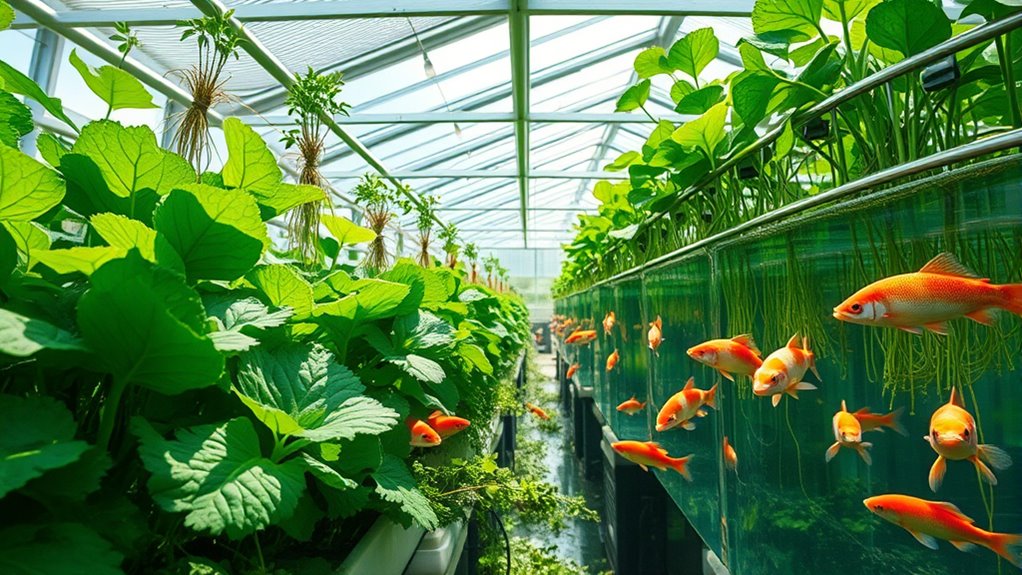

In aquaponic greenhouses, you combine fish farming with growing greens in a system that recycles water efficiently. Fish produce nutrient-rich waste that feeds your plants, while the plants filter the water for the fish, creating a balanced cycle. This method reduces water use and avoids chemicals, making it eco-friendly and sustainable. Want to discover how this innovative approach can transform your food production? Continue to explore more about this remarkable farming system.
Key Takeaways
- Aquaponic greenhouses integrate fish farming and plant cultivation in a sustainable, symbiotic system.
- Fish waste provides natural nutrients for greens, reducing need for chemical fertilizers.
- The system recycles water continuously, promoting water conservation and resource efficiency.
- Controlled environments optimize conditions for healthy fish and lush greens, enhancing productivity.
- Suitable for various scales, from backyard gardens to large commercial farms, supporting local food production.
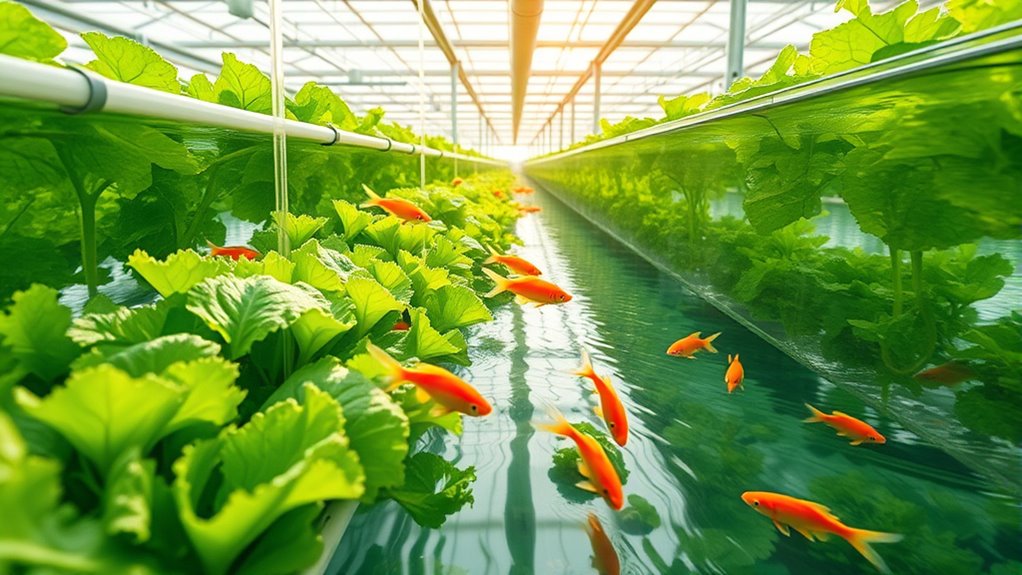
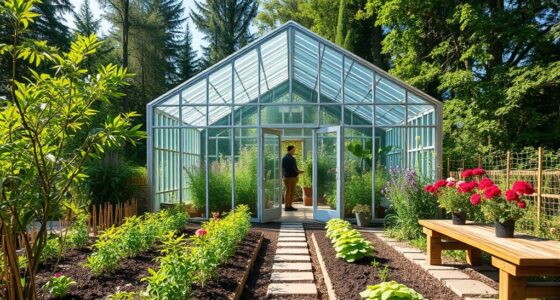
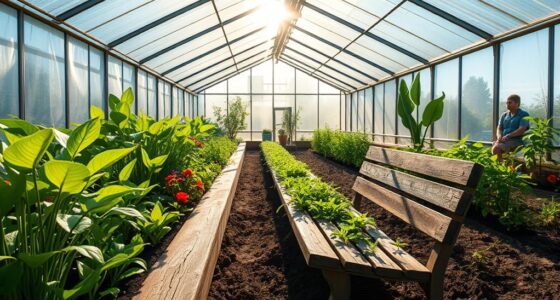
Aquaponic greenhouses are innovative agricultural systems that combine fish farming with plant cultivation in a symbiotic environment. In this setup, fish produce nutrient-rich waste that feeds the plants, while the plants filter the water for the fish, creating a closed-loop system. This integration not only maximizes space efficiency but also promotes a sustainable approach to food production. As you explore these greenhouses, you’ll notice that their design prioritizes sustainable principles, especially in water conservation. Unlike traditional agriculture, aquaponics recycles water continuously, reducing overall usage markedly. Instead of relying on large quantities of fresh water, you benefit from a system that reuses water multiple times, making it ideal for regions facing water scarcity.
Aquaponic greenhouses recycle water continuously, promoting sustainability and efficient resource use in food production.
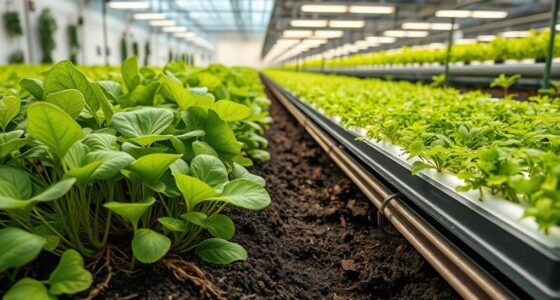
The sustainable design of aquaponic greenhouses means they use fewer resources and generate less waste. You’ll find that the water flows through a series of carefully engineered channels, where plants absorb nutrients directly from the water, and filtered water returns to the fish tanks. This process minimizes water loss through evaporation and runoff, which are common issues in conventional farming. Because the system relies on natural biological processes, it doesn’t require chemical fertilizers or pesticides, further reducing environmental impact. As a result, you get healthier produce while actively contributing to water conservation efforts.
Moreover, aquaponic greenhouses are adaptable to various scales, from small backyard setups to large commercial operations. Their modular nature allows you to design a system tailored to your specific needs, whether you’re aiming for sustainable home gardening or large-scale food production. The efficiency of water use in these greenhouses also means you can operate in areas where water resources are limited, making sustainable farming accessible to more people. Incorporating top-quality equipment can further enhance system performance and longevity.
In addition to conserving water, aquaponic greenhouses promote energy efficiency through their controlled environment. You can optimize temperature, light, and humidity to ensure plants and fish thrive without excessive energy input. This controlled environment minimizes resource waste while maximizing productivity. As you become more familiar with aquaponics, you’ll appreciate how the integration of fish and plants creates a resilient, eco-friendly system. It’s an innovative approach that aligns with environmental preservation, especially when it comes to conserving water and reducing ecological footprints. Overall, aquaponic greenhouses offer a forward-thinking solution for sustainable food production that benefits both your local environment and the planet.
As an affiliate, we earn on qualifying purchases.
Frequently Asked Questions
What Fish Species Are Best Suited for Aquaponic Greenhouses?
When choosing fish species for your aquaponic greenhouse, focus on those that thrive in controlled environments. Popular options include tilapia, trout, and catfish because they tolerate varying water conditions and grow quickly. You need to prioritize fish species selection carefully, considering their adaptability and growth rate. Effective water quality management is vital to keep your fish healthy, ensuring a balanced ecosystem that supports both fish and plant growth for a successful system.
How Does Temperature Control Affect Fish and Plant Health?
Imagine you’re in a sci-fi movie—temperature control’s vital! When you maintain temperature stability, you optimize fish metabolism and plant growth, preventing stress and disease. Fluctuations can shock your aquatic ecosystem, harming fish and stunting greens. By monitoring and adjusting temperatures, you guarantee a healthy, thriving environment where fish and plants flourish, boosting productivity and sustainability. Proper temperature management keeps everything balanced, just like a well-oiled machine.
What Are the Common Pests and Diseases in Aquaponic Systems?
You should know that common pests like aphids and caterpillars can threaten your system, while diseases such as bacterial infections and fungal issues also pose risks. To keep your aquaponic system healthy, focus on pest prevention by maintaining cleanliness and monitoring plants regularly. Effective disease management involves removing affected plants promptly and ensuring good water quality. Staying vigilant helps protect your fish and greens, ensuring a thriving, balanced environment.
How Much Energy Is Required to Operate an Aquaponic Greenhouse?
You’ll need a variable amount of energy to run an aquaponic greenhouse, depending on its size and climate. By focusing on solar efficiency and incorporating energy saving technologies, you can markedly reduce your energy consumption. Using solar panels, proper insulation, and efficient pumps helps lower costs and environmental impact. With these strategies, you make your system more sustainable, ensuring productive growth while minimizing energy use.
What Are the Initial Costs and Ongoing Maintenance Expenses?
Your initial investment in an aquaponic greenhouse covers setup costs like infrastructure, system components, and permits, which can range widely based on size and technology. Ongoing maintenance costs include water quality management, energy for pumps and lights, and occasional system upgrades. You’ll need to budget for these maintenance costs regularly to keep your system running smoothly, but overall, aquaponic greenhouses can offer cost-effective, sustainable food production over time.
Conclusion
As you explore aquaponic greenhouses, you’ll discover a sustainable way to grow fresh greens and raise fish simultaneously. This innovative system proves that “a little knowledge is a dangerous thing,” but with understanding, you can create a thriving, eco-friendly garden. Embrace the magic of aquaponics, and you’ll find that working smarter, not harder, leads to bountiful harvests and healthier living. Start small, stay curious, and watch your green oasis flourish!