
When you see electric cars claiming a 75 kWh battery, the number is often optimistic. The actual usable energy is typically lower because the battery management system reserves some capacity for safety, longevity, and thermal health. Over time and with real-world conditions like temperature and charge cycles, this usable limit can decrease further. Understanding the difference helps you set realistic expectations and get the most out of your battery — if you want to learn more, keep exploring.
Key Takeaways
- Advertised capacity often exceeds the usable energy available due to safety margins and system limitations.
- Usable capacity decreases over time as batteries age and undergo degradation.
- Operating conditions like temperature and charging rates impact the actual accessible energy.
- Battery management systems limit usable capacity to prolong lifespan and ensure safety.
- Understanding these differences helps set realistic expectations for battery performance and longevity.
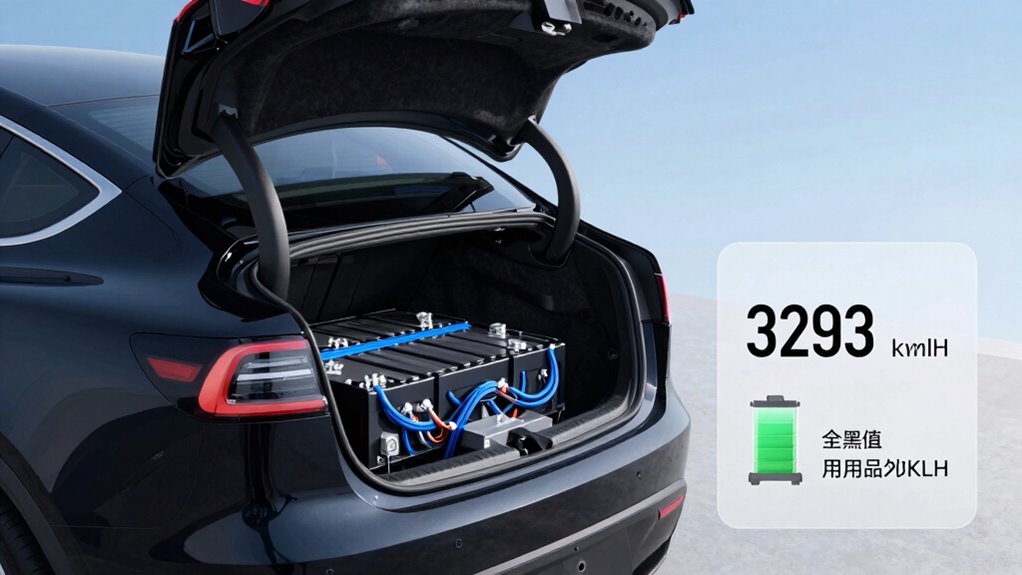
Understanding your battery’s true capacity is essential for getting the most out of your devices. When you see a battery’s advertised capacity, like 75 kWh for an electric vehicle, it’s tempting to assume that’s exactly what you’re getting. But the reality is more nuanced. The usable capacity—the amount of energy you can reliably draw from your battery—is often less than the marketing number suggests. This discrepancy stems from factors like energy density and lifespan considerations that influence how much power your battery can deliver over time.
Advertised battery capacity often exceeds what you can reliably use over time.
Energy density plays a crucial role here. It measures how much energy a battery can store relative to its weight or volume. High energy density batteries can pack more power into a smaller space, which is great for extending range in electric vehicles or increasing portability in portable devices. However, energy density isn’t the sole determinant of usable capacity. As batteries age, their energy density can decrease, meaning they store less energy than when they were new. This decline impacts the overall lifespan factors, such as how many charge-discharge cycles a battery can endure before its capacity diminishes substantially. Understanding these lifespan factors helps you realize that a battery’s initial capacity isn’t static; it will degrade over time, reducing the usable energy you can access.
Manufacturers often highlight the total capacity of their batteries to impress consumers, but they don’t always clarify how much of that capacity is practically available for everyday use. For example, they might specify a 75 kWh battery, but due to safety margins, thermal management, and degradation considerations, you might only be able to utilize around 70 kWh during regular operation. This is because battery management systems often limit the usable capacity to prolong the battery’s lifespan, preventing overcharging or deep discharges that accelerate wear.
Furthermore, operating conditions influence how much energy you can draw from your battery. Extreme temperatures, high discharge rates, or frequent rapid charging can accelerate capacity fade, reducing the effective usable capacity over time. That’s why understanding the interplay between energy density and lifespan factors is essential. It helps you set realistic expectations about your device’s performance and longevity. Instead of relying solely on marketing numbers, knowing the actual usable capacity, which accounts for these factors, enables you to plan better for charging, range, and eventual replacement.
Additionally, awareness of battery management systems and their role in preserving battery health can help you optimize usage patterns to maximize longevity. In essence, recognizing that the advertised capacity often differs from what you can practically use empowers you to make more informed decisions. It encourages a mindset that values long-term performance over initial impressions, ensuring you get the most out of your investment in batteries and devices.
Frequently Asked Questions
How Does Temperature Affect Battery Capacity?
Temperature critically impacts your battery capacity through temperature effects. When it’s cold, thermal management becomes essential because low temperatures reduce chemical reactions inside the battery, decreasing capacity and range. Conversely, high temperatures can cause overheating, which risks damage and shortens lifespan. Maintaining ideal temperature conditions guarantees your battery performs efficiently, preserving capacity and longevity. Proper thermal management helps mitigate these temperature effects, keeping your battery healthier and more reliable over time.
What Is the Impact of Aging on Usable kWh?
Aging causes your battery’s usable kWh to decrease through battery degradation and capacity fade. Over time, chemical changes reduce the amount of energy your battery can store and deliver. You’ll notice shorter driving ranges, longer charging times, and diminished performance. To minimize aging effects, keep your battery cool, avoid deep discharges, and follow proper charging habits. Staying proactive helps preserve your battery’s capacity and prolongs its lifespan.
Are There Regional Differences in Marketing Claims?
You’ll notice regional branding influences marketing claims, leading to market variations in advertised battery capacities. Manufacturers often tailor their marketing based on local preferences and standards, which can cause differences in how usable kWh is presented. In some regions, companies might emphasize higher marketing numbers to attract buyers, even if the actual usable capacity is lower. So, always compare the real usable kWh rather than just marketing claims to get an accurate picture.
How Do Charging Habits Influence Actual Capacity?
You can’t judge your battery’s true capacity without considering your charging speed and user behavior. If you frequently fast-charge, you might wear down your battery faster, reducing usable capacity over time. Conversely, slow, steady charging helps preserve battery health. Think of it as a marathon, not a sprint — your habits directly influence how much of the battery’s capacity you actually use, so be mindful of how you charge.
Can Software Updates Improve Usable Battery Capacity?
Yes, software updates can improve your usable battery capacity through battery calibration and software optimizations. Calibration ensures your device accurately reports its charge level, preventing premature shutdowns or overestimations. Software optimizations enhance how your device manages power, reducing unnecessary drain and extending overall usable capacity. Keep your device updated to benefit from these improvements, guaranteeing you get the most out of your battery’s actual capacity and performance.
Conclusion
Understanding the difference between usable kWh and marketing numbers helps you make smarter choices. For example, a 75 kWh battery might only give you around 70 kWh of usable energy, highlighting the importance of real-world expectations. Keep this in mind, so you’re not caught off guard by advertised capacities. By knowing the truth behind these numbers, you can better gauge what your vehicle or home battery can truly deliver, making your energy decisions more informed and reliable.